

A seroprevalence study of dengue following a two-month outbreak in Nîmes, France, in 2015: did we miss any cases?
Dengue serosurvey following a two-month outbreak in Nîmes, France, in 2015: was there more to the story than met the eye?
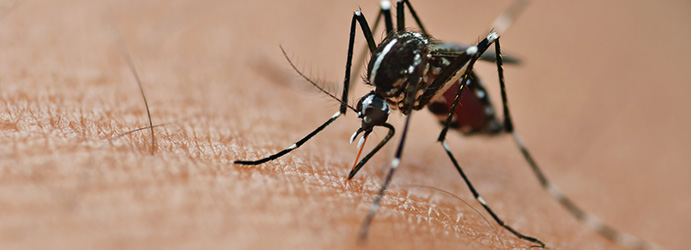
While Aedes aegypti is the primary vector for dengue fever in tropical regions, the other vector, Aedes albopictus—originally confined to Southeast Asia—is now found worldwide, including in temperate regions. First reported in Europe in the late 1970s, Aedes albopictus became established in France for the first time in 2004. A few sporadic cases of locally acquired dengue were reported there in 2010, 2013, and 2014. In 2015 (July–September), a larger-scale dengue outbreak occurred in a neighborhood of Nîmes (Occitanie). The epidemiological investigation conducted by Santé publique France identified 7 locally acquired cases in the immediate vicinity of a single imported index case, occurring over a 2-month period(1). Three months after this outbreak (November 2015), which coincided with the end of vector circulation, Santé publique France, in collaboration with the National Center for Arboviruses and the Pasteur Institute in Paris, conducted a seroprevalence study at the site of this dengue outbreak to better understand the factors driving local dengue transmission. The results of this study were published in the journal Eurosurveillance.


3 questions for Tiphanie Succo, Regional Directorate, and Harold Noel, Infectious Diseases Directorate
The subject matter and the study area led us to innovate in several ways. In the absence of census data at the neighborhood level for the area affected by this outbreak, we had to estimate the size of its population and reconstruct its structure. To do this, our geomatics colleague, Perrine de Crouy-Chanel, overlaid the data provided by INSEE for 200-meter grid cells (“INSEE 200-meter grid data”) onto the identified housing units. We were thus able to adjust our estimate of the proportion of infected individuals so that it applied to the entire neighborhood population—an approach rarely adopted for this type of infectious disease study.
The contribution of mathematical modeling by Birgit Nicolay of the Institut Pasteur in Paris was crucial in determining whether we had missed any cases. The estimate of the number of symptomatic or asymptomatic cases obtained using this model corresponded to what was observed during the epidemiological survey.
Finally, our study included a significant “humanities and social sciences” component. We documented in detail the knowledge, attitudes, and practices of neighborhood residents regarding mosquito protection. There is little data of this kind on a population that has just been affected by a dengue outbreak and for whom this disease is unfamiliar. This component will soon be the subject of a separate publication.
At the conclusion of our study, only one case (asymptomatic) that had not been identified during the initial epidemiological investigation was detected. We were surprised by this result because we had expected that more cases, particularly asymptomatic ones, would have gone undetected. Indeed, the literature typically reports that for every 1 symptomatic dengue case, there are 4 asymptomatic cases. Furthermore, by demonstrating that we did not need additional cases to reconstruct the transmission chain for this outbreak, we showed that the surveillance and investigation of the outbreak likely did not miss any cases that could explain the observed transmission.
Our study is likely the first in Europe to examine the contribution of asymptomatic cases to dengue transmission. In Europe and France, given the recent and low circulation of the vector, the population is almost entirely naive to the dengue virus. This explains the absence of asymptomatic cases observed in this study, unlike what is reported in Asia and the Americas, where populations are partially immune and access to care is less readily available. The hypothesis here is that in those regions of the world where dengue has been most extensively studied, people with mild symptoms are less likely to seek medical care and report their symptoms. We have shown that in this outbreak, transmission occurred primarily within households, with very localized person-to-person spread.
We have not observed a “full-blown outbreak” as has been reported in other parts of the world. However, we must remain vigilant given the increase in the number of travelers returning from endemic areas, the growing mosquito population, and climate change. Nevertheless, we cannot conclude that there is a high risk of a dengue epidemic in mainland France based on this study.
Arboviral diseases are highly diverse, so these results are difficult to extrapolate to others such as West Nile fever, chikungunya, or Zika. For now, our surveillance system still appears adequate: it allows us to identify the first autochthonous cases fairly quickly and to implement vector control measures in a timely manner. Indeed, our study showed that no cases occurred outside the area where mosquito control measures were implemented.
Nevertheless, it is a demanding system that requires good coordination among its various stakeholders and mobilizes significant human resources for field investigations [ARS, Santé publique France in the regions (Cire)…].
Ideally, it would be worthwhile to repeat this type of study to monitor a potential increase in the epidemic potential of dengue in mainland France. However, such studies are costly. Ideally, it should be conducted for an outbreak with more cases than the one that occurred in Nîmes to study risk factors and protective behaviors regarding dengue in the field.
For more information:
On the dengue epidemic
Succo Tiphanie, Leparc-Goffart Isabelle, Ferré Jean-Baptiste, Roiz David, Broche Béatrice, Maquart Marianne, Noel Harold, Catelinois Olivier, Entezam Farhad, Caire Didier, Jourdain Frédéric, Esteve-Moussion Isabelle, Cochet Amandine, Paupy Christophe, Rousseau Cyril, Paty Marie-Claire, Golliot Franck. Autochthonous dengue outbreak in Nîmes, South of France, July to September 2015. Euro Surveill. 2016;21(21):pii=30240.
On dengue and the surveillance system
(1) Succo Tiphanie, Noel Harold, Nikolay Birgit, Maquart Marianne, Cochet Amandine, Leparc-Goffart Isabelle, Catelinois Olivier, Salje Henrik, Pelat Camille, de Crouy-Chanel Perrine, de Valk Henriette, Cauchemez Simon, Rousseau Cyril. Dengue serosurvey after a 2-month-long outbreak in Nîmes, France, 2015: was there more than met the eye? Euro Surveill. 2018;23(23):pii=1700482.