

Launch of the 2021 NOYADES Survey: Toward Better Prevention
CP_enquete_Noyades_2021_150621.pdf
Download (PDF - 579.07 KB)
Press Contacts
Santé publique France
presse@santepubliquefrance.fr,
Vanessa Lemoine: 01 55 12 53 36 - Cynthia Bessarion: 01 71 80 15 66 - Stéphanie Champion: 01 41 79 67 48 - Marie Delibéros: 01 41 79 69 61 - Charlène Charbuy: 01 41 79 68 64
Directorate General of Health
presse-dgs@sante.gouv.fr
01 40 56 84 00
Ministry of the Interior
Commander Alexandre Jouassard, Head of the Communications Office of the Directorate General for Civil Security and Crisis Management
dgscgc-com@interieur.gouv.fr
01 45 64 48 64 / 06 72 76 47 61
Ministry of Sports
sec.presse.sports@sports.gouv.fr
01 40 45 90 15
Ministry of Ecological Transition
Maguelonne Deschard
presse@ecologie.gouv.fr
01 40 81 19 38
A NOYADES survey is being conducted in mainland France and the overseas territories from June 1 to September 30, 2021, to record all drowning incidents—regardless of their cause (accidental, suicidal, criminal, or undetermined)—that are responded to by an organized emergency service and result in hospitalization or death.
This survey is organized by Santé publique France, with support from the Ministry of Solidarity and Health (Directorate General for Health), the Ministry of the Interior (Directorate General for Civil Security and Crisis Management), the Ministry of Ecological Transition (Directorate for Housing, Urban Planning, and Landscapes), and the Ministry of Sports (Directorate of Sports).
Preliminary figures from the 2021 NOYADES survey covering the period from June 1 to 13 report 128 accidental drownings under investigation, including 41 deaths (32%). Four epidemiological reports with preliminary survey results will be published throughout the summer (mid-July, late July, mid-August, and early September). Santé publique France reminds the public of the proper precautions for safe swimming.
Objective of the NOYADES survey: analyze to better prevent
The objective of this survey is to describe the characteristics and risk factors of accidental drownings during the summer of 2021. A detailed description of all these drownings (characteristics of the victims and their outcomes, circumstances surrounding the drownings) will help better guide prevention and regulatory actions.
Data collection is carried out by emergency services: the Departmental Fire and Rescue Services, the Paris Fire Brigade, the Marseille Marine Fire Brigade, the SAMU-SMUR, as well as hospital and clinic emergency departments and intensive care units, the gendarmerie, the police and CRS lifeguards, the National Society for Sea Rescue, the Regional Operational Centers for Surveillance and Rescue, and other organizations.
The current situation related to COVID-19 calls for vigilance
Children have not been able to learn to swim under normal conditions since March 2020. Furthermore, the ongoing easing of lockdown restrictions may lead to an increased risk of drowning: a relaxation of safety precautions and an increase in risky behavior (overestimating one’s physical abilities, underestimating environmental risks, and consuming alcohol before swimming). To ensure that swimming remains a pleasurable activity, it is essential to remain vigilant while swimming, as indicated by the initial figures from the 2021 NOYADES survey.
Precautions to take for safe swimming
Each year, accidental drownings account for approximately 1,000 deaths in France, with about half occurring between June and September. The NOYADES surveys, conducted every three years, highlight that drownings affect people of all ages and occur in all settings. While swimming involves risks, most drownings are preventable. That is why Santé publique France, together with its partners, provides healthcare professionals and the general public with prevention tools outlining the steps to take to develop water confidence, swim, and engage in water activities safely. These prevention tools are available here.
Swimming carries risks at any age, but simple steps can be taken to ensure safe swimming.
For young children:
Teach children to swim as early as possible and help them become comfortable in the water from a young age
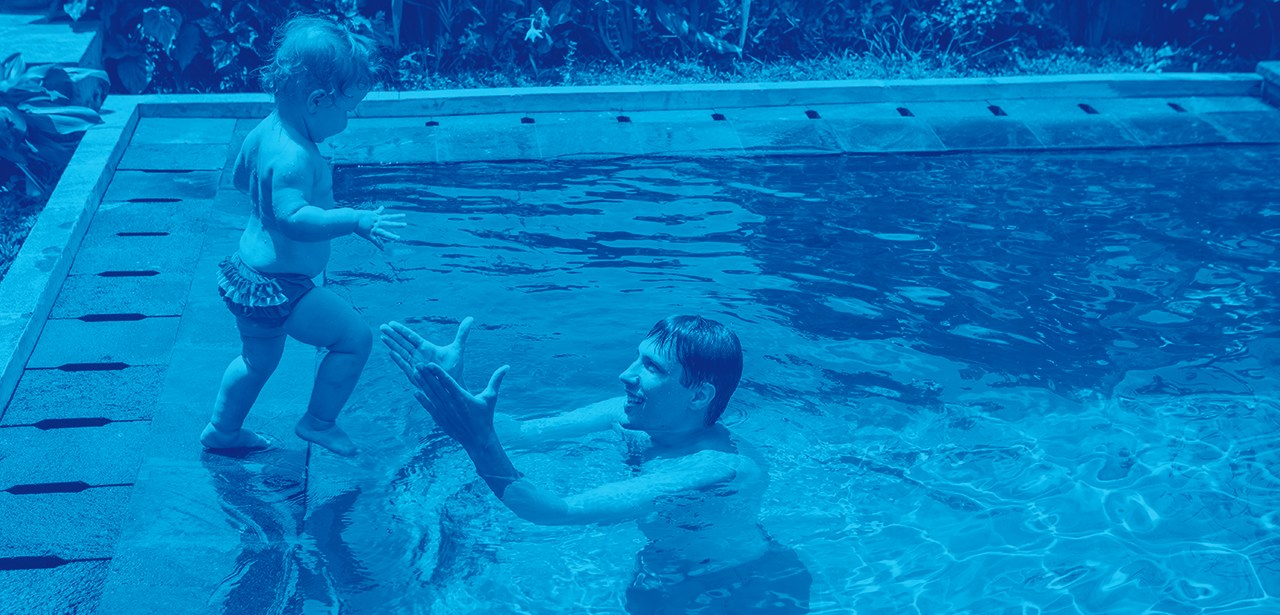
Supervise children at all times, always stay close to them when they are playing near the water, and swim with them when they are in the water
Each child must be supervised by a single adult who takes responsibility for them
Exercise particular caution when swimming in above-ground (non-inground) pools that lack safety features
For adults:
It’s never too late to start learning to swim
Check the weather conditions and, in general, follow safety guidelines, swimming bans, and choose supervised swimming areas marked by swimming flags, where rescue teams can respond more quickly
Be mindful of your physical condition: do not swim if you feel unwell (fatigue, health issues, chills) and do not overestimate your swimming ability
Let a family member or friend know before going swimming
Enter the water gradually, especially after prolonged sun exposure
Avoid drinking alcohol before swimming
Drowning
thematic dossier
Our latest news

news
Growing Up with Screens. A special report in *La Santé en action* No. 474,...

news
Seniors, pregnant women, and nursing home staff: What is the status of their...

news