
Surveillance of Infections Associated with Invasive Devices. SPIADI National Initiative. Results of the 2025 Surveillance Study and Trends from 2023 to 2025
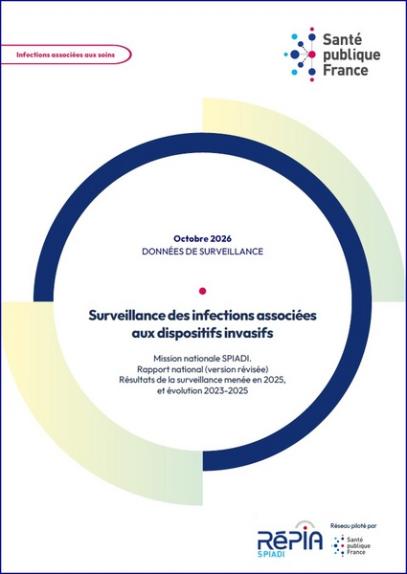
Since 2018, the national SPIADI initiative—funded and led by Santé publique France—has been monitoring infections associated with invasive vascular devices across all healthcare sectors to prevent the risk of infection throughout the patient’s care journey. As part of this effort, it submits the results of its work from the previous year to the agency annually. In 2025, 637 healthcare facilities (21.5% of the national total), spread across all French regions, participated in this surveillance. These facilities represented 125,632 hospital beds and covered all types of departments in the adult, pediatric, and neonatal sectors, for a total of 9,725,660 hospital days. In 2025, 9,607 healthcare-associated bacteremias were documented by this initiative, of which 2,976 (31%) were catheter-related. The proportion of bacteremias associated with midline peripheral venous catheters had been increasing significantly since 2023, particularly in surgical units and in medical and rehabilitation units, while the proportion attributed to PICCline central venous catheters was decreasing. In adult intensive care units, the incidence of central venous catheter-related bacteremias was increasing, whereas in neonatology, the incidence of Staphylococcus haemolyticus catheter-related bacteremias in the most fragile newborns (less than 750 g) had been decreasing since 2023. The microorganisms most frequently implicated in catheter-related bacteremias have varied little since 2023 and include coagulase-negative staphylococci (36.5%), Enterobacterales (22.2%), and Staphylococcus aureus (19.2%). Among these bacteremias, 7.1% involve a multidrug-resistant bacterium or an emerging highly resistant bacterium, including methicillin-resistant Staphylococcus aureus and Enterobacterales resistant to third-generation cephalosporins and carbapenems. Surveillance of infections associated with invasive devices is a key component of the National Strategy for Infection Prevention and Antibiotic Resistance 2022–2027 (SNPIA). While the SNPIA indicators (national incidence of catheter-related bacteremia in intensive care units < 1,000 per 1,000 catheter-days) and those specific to the SPIADI initiative (national incidence of catheter-related bacteremia in intensive care units < 1,000 per 1,000 full hospital days) remain generally stable, with a total of less than 10% of participating facilities falling short of the expected target, These results underscore the importance of strengthening prevention efforts for infections associated with midline catheters, particularly in surgical, medical, and rehabilitation units.
Author(s): Duflot Nicolas, Dussartre Maris, Goube Florent, Valentin Anne-Sophie, van der Mee-Marquet Nathalie
Publishing year: 2026
Pages: 102 p.
Collection: Monitoring Data
In relation to
Our latest news

news
Growing Up with Screens. A special report in *La Santé en action* No. 474,...

news
Seniors, pregnant women, and nursing home staff: What is the status of their...

news