
Data
The surveillance system for invasive pneumococcal infections established by Santé publique France makes it possible to study the epidemiological trends of this vaccine-preventable disease as well as vaccination coverage.
Stable Vaccination Coverage
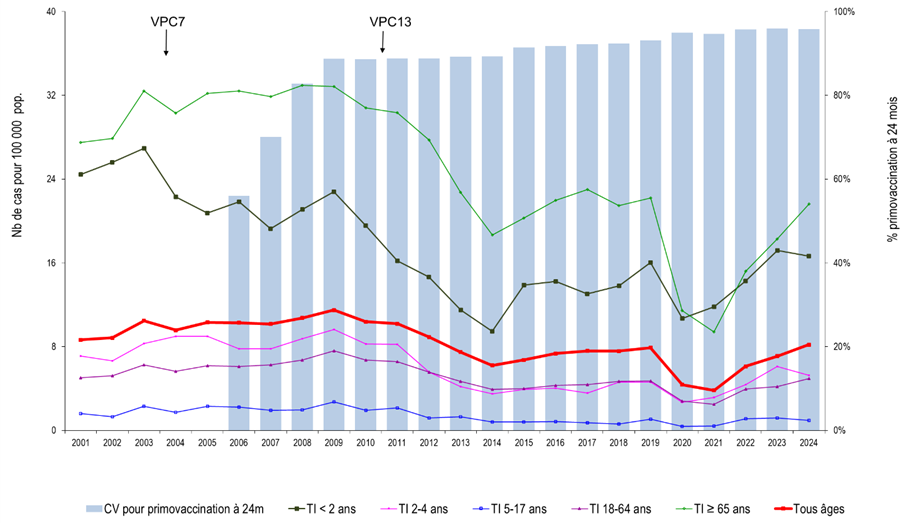
Vaccination coverage for three doses among children aged 24 months is approximately 95% in 2024 and has remained stable since 2020.
An increase in incidence in 2024, but at levels close to those observed before the COVID-19 pandemic
The introduction of the PCV13 vaccine into the infant immunization schedule in 2010 was followed, through 2014, by a marked decrease in invasive pneumococcal infections among children under 2 years of age. Thanks to herd immunity resulting from high vaccination coverage and the vaccine’s effectiveness against nasopharyngeal carriage, a decrease was also observed among older children and adults.
Between 2015 and 2019, an upward trend in the annual incidence rate was observed, primarily linked to the increased incidence of infections caused by serotypes not included in the 13-valent pneumococcal conjugate vaccine (PCV13), which accounted for 74% of all infections in 2015 and 79% in 2019, with serotypes 8, 12F, and 22F predominating among adults, serotype 24F among children, and serotype 3—included in the 13-valent pneumococcal conjugate vaccine (PCV13)—among adults, due to the vaccine’s lower protection against this serotype.
In 2020, following the implementation of public health measures nationwide in response to the emergence of COVID-19, a sharp decline in the incidence rate was observed across all age groups. In 2021, the decline continued at the national level but at a more moderate pace than the previous year, with variations across age groups. The incidence rate thus rose again for bacteremia among children under 5 years of age and for meningitis among children under 2 years of age and those aged 5 to 17 years; however, levels remained below those of 2019, before the onset of the pandemic.
In 2022, a marked increase in the incidence rate was observed compared to 2021 for invasive pneumococcal infections, reaching a level close to that of 2019 before the pandemic. This resurgence, likely linked to the lifting of COVID-19 public health measures, began in October 2022. In 2023 and 2024, the incidence rate rose again, by 16% and 15%, respectively, reaching a level broadly similar to that observed before the COVID-19 pandemic.
Trends in the incidence rate of invasive pneumococcal infections by year and age, and trends in 3-dose vaccination coverage (VC) at 24 months of age, mainland France, 2001–2024
In relation to

Vaccination
thematic dossier
Contagious diseases most often affect children at a very young age. Because children are particularly vulnerable, they are a priority target for vaccination programs.