Acceptability of an early prevention intervention in the home, implemented by maternal and child health services (PMI), for vulnerable populations: Findings from the "1,000 Parents / 1,000 Days" survey by Santé publique France
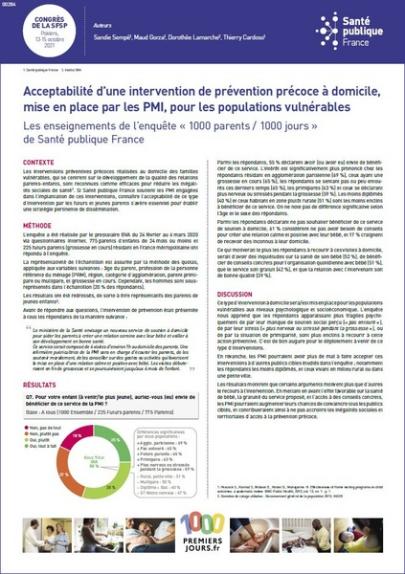
Background: Santé publique France supports maternal and child health centers (PMI) in implementing more preventive home-based interventions focused on improving the quality of parent-child relationships. This type of intervention is recognized as effective in reducing social inequalities in health. Understanding the acceptability of this type of intervention among the target population is essential for developing an effective dissemination strategy. Method The survey was conducted by the research firm BVA via online questionnaires from February 24 to March 6, 2020. 775 parents of children aged 24 months or younger and 225 expectant parents (currently pregnant) residing in mainland France responded to the survey. The representativeness of the sample is ensured by the quota method. The results were adjusted to be representative of parents of young children. Results 55% of respondents say they would like to use this service. Interest is higher among first-time parents (63%) and those living in the Paris metropolitan area (69%). Respondents with the lowest levels of education (40%) and those living in more rural areas (51%) are the least likely to use this service. 61% of respondents who stated they do not wish to use this service believe they do not need advice to build a calm and positive relationship with their baby, and 17% are concerned about having strangers in their home. What motivates respondents to use this service are concerns about their baby’s health (52%), practical advice for daily routines with the baby (51%), the fact that the service is free (42%), and the caregiver’s interpersonal skills (39%). Discussion Acceptance of early preventive home visits is high. However, it varies across social and geographic groups. Yet, it is not always the groups expressing the greatest interest that are most in need of these interventions. Maternal and Child Health (MCH) centers will need to adapt their strategies for promoting these interventions based on the survey results to avoid the risk of increasing inequalities.
Conference of the French Society of Public Health (SFSP), Poitiers, 13-15 octobre 2021
Author(s): Sempé Sandie, Gorza Maud, Lamarche Dorothée, Cardoso Thierry
Publishing year: 2021
In relation to
Our latest news

news
SIBCA 2026: The UrBaCS network presents its solutions for cities and...

news
Physical Activity and Combating a Sedentary Lifestyle: How Does Santé...
news