Launch of the "Moi(s) sans tabac" campaign: a new strategy for Santé publique France
In France, 13 million adults smoke every day. Tobacco kills 73,000 people each year and is the leading cause of preventable death. The government has made the fight against smoking a priority by implementing a "National Program to Reduce Smoking."
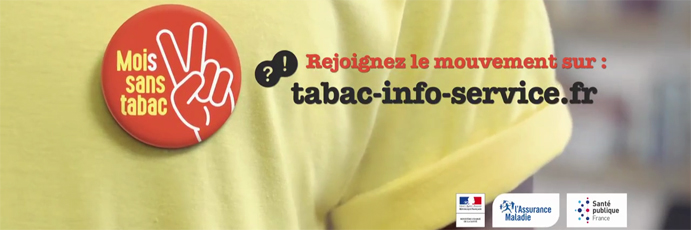
Quitting for a month increases your chances of quitting for good by five times
The "Moi(s) sans tabac" campaign, launched by Marisol Touraine, Minister of Health, and Santé publique France in partnership with the French national health insurance system, will run from November 1 to 30, 2016. This initiative, the first of its kind in France, encourages all smokers to quit together for one month. In fact, after 30 days of abstinence, the addiction is much weaker, and smokers are five times more likely to quit for good.
Smoke-Free Month features two key events:
OCTOBER: Start of the registration phase, supported by a campaign running from October 10 to 31 on TV, the web, mobile platforms, and billboards. NOVEMBER: Kickoff of the collective challenge
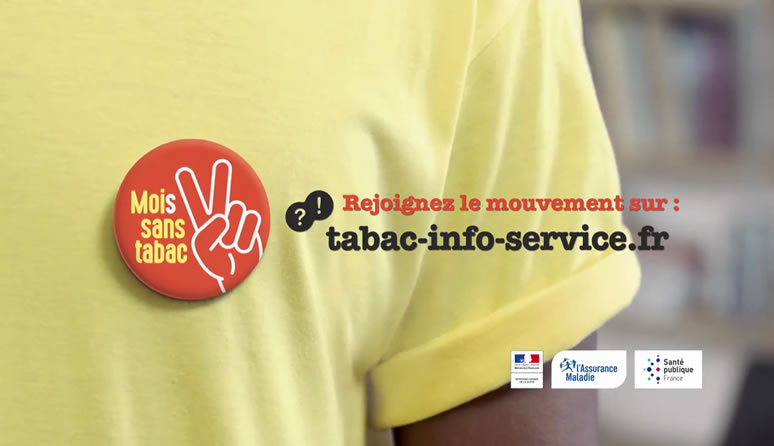
Smoke-Free Month, the group challenge
Learn more:
Smoking in France: behaviors, attributable mortality, and evaluation of smoking cessation support programs. Weekly Epidemiological Bulletin 2016;30-31.
6 Questions for François Bourdillon, Director General of Santé publique France
The “Moi(s) sans tabac” campaign is important—what strategies has Santé publique France sought to implement?

For this campaign, Santé publique France relied on approaches that have proven effective, are sustainable, and mobilize efforts at both the national and regional levels.It was also a matter of developing prevention strategies based on new technologies: on the one hand, social marketing—which has been so widely developed across the Atlantic—and, on the other hand, integrating scientific data into all the tools typically used in prevention: the Internet, social media, smartphone apps, telephone services…Finally, Santé publique France sought to develop a partnership across the entire country, serving as the first step toward a national public health network focused on prevention and health promotion. Thus, for over a year now, we have mobilized all our resources: scientists in the field of epidemiology, operational staff working with new information technologies, advocacy teams to mobilize our partners at both the national and regional levels, and, of course, marketing teams to ensure that our communications effectively link campaigns with local initiatives.
Smoke-Free Month is based on scientific data—which data?
The special tobacco edition of the BEH that we are publishing today, October 6, 2016, presents a wealth of new data:
the UK’s Stoptober campaign, of course, led by our counterpart, PHE (Public Health England). Launched annually since 2012, this campaign has been a great success. As you know, the rate of daily smokers in England is under 20% (29% in France). The campaign lasts one month because quitting for a month increases the chances of quitting permanently by five times;
the annual prevalence data for us at J0 (I committed to this upon my arrival, as only the publication of annual prevalence data allows us to assess the effectiveness of the national tobacco reduction program). These confirm the high prevalence of smoking in our country in 2015: 28.8% of daily smokers;
regional smoking data, as rates vary from one region to another; this data is crucial for regional health agencies and for setting their priorities;
data on smoking at home, where we are seeing real improvements, which is encouraging;
updated data on tobacco-related deaths: 73,000 deaths per year in 2013, confirming the burden that smoking places on our country (the last study was based on 2010 data);
data on e-cigarette use;
very encouraging data on the effectiveness of interventions, whether through the Tobacco Info Service or tobacco cessation consultations.
What are the strengths of “Month Without Tobacco”?
Smoke-Free Month is a positive campaign. It aims to celebrate those who quit smoking and those who help them try to quit. It is not a moralizing campaign or simply about providing information on smoking cessation tools. It also offers tools to aid in quitting smoking, among which we must highlight the Tobacco Info Service (website, smartphone app, and the 3989 hotline) and the Smoking Cessation Support Kit, which helps users prepare to quit by identifying their motivations, offers support during the quit process, provides a daily planner and different tips every day for one month, encourages exercises to combat stress, and allows users to track the savings associated with quitting.
"Moi(s) santé tabac is about everyone getting involved; it’s a strategy of collective empowerment; it’s France quitting; it’s a new approach that breaks with all previous campaigns."
And after that…?
Moi(s) sans tabac will be an evaluated initiative. Santé publique France will provide a feedback report on the Moi(s) sans tabac initiative, conduct an assessment of the campaign’s exposure effects and trends in quit attempts, and monitor smoking prevalence in France.
Who are your partners for this campaign?
At Santé publique France, we are very proud of the partnerships we have forged because we no longer act alone, because we have undertaken advocacy efforts, and because we have sparked a genuine resonance throughout society. I am delighted by our partnership with some fifty national partners: the Ministry of Health and regional health agencies, health insurance providers (CNAMTS and MSA), professional associations for all healthcare workers (doctors, midwives, nurses, pharmacists, etc.), the National League Against Cancer, partnerships with public and private companies, and of course the entire nonprofit sector. These partnerships allow us to significantly expand the scope of the initiative, and I have no doubt about its effectiveness.
And to conclude…what would you say?
I hope that this major “Moi(s) sans tabac” campaign will contribute to the success of the national smoking reduction program. With “Moi(s) sans tabac,” we are entering a new era of public health mobilization.