
COVID-19 Epidemiological Update, March 4, 2021: The virus is circulating at high levels, variants are becoming the dominant strains, and pressure on hospitals is mounting
CP_pe_covid_040321.pdf
Download (PDF - 279.32 KB)
Press Contacts
Santé publique France
presse@santepubliquefrance.fr
Stéphanie Champion: 01 41 79 67 48
Marie Delibéros: 01 41 79 69 61
Camille Le Hyaric: 01 41 79 68 64
Published weekly, the epidemiological update on COVID-19 surveillance provides a detailed analysis of the indicators established by Santé publique France and its network of partners to track the progression of the epidemic and guide public policy decisions. In week 08, the rise in infections continued, with a 7% increase, representing 149,307 new confirmed cases. The already high strain on hospitals is intensifying as variants become predominant, with suspected cases of the 20l/501Y.V1 (UK) variant accounting for 59.5% of screening PCR tests. Regional disparities are significant and require local adaptation of epidemic control measures. At the same time, the improvement in epidemiological indicators among those aged 75 and older and nursing home residents reflects the protective effect of the vaccination coverage achieved in this population. Accelerating vaccination in the coming weeks is a major challenge.
High viral circulation continues to rise, with regional variations
The spread of the epidemic observed last week is confirmed by an increase in the number of confirmed cases in week 08: 149,307 new confirmed cases were recorded, averaging 21,330 confirmed cases per day. The incidence rate was 222 per 100,000 inhabitants, up 7% from the previous week. All age groups are affected by this increase, except for those aged 75 and older, among whom a decrease has been observed for the fourth consecutive week. People aged 15 to 44 have had the highest incidence rates for the past four weeks.
Across the country, the situation varies. The regions most affected in week 08 were still Provence-Alpes-Côte d’Azur, Hauts-de-France, and Île-de-France. These regions had the highest incidence rates, hospitalization rates, and intensive care admissions. All of these indicators are on the rise in Île-de-France and Hauts-de-France. The 12 departments with incidence rates exceeding 300 per 100,000 inhabitants are all located in these three regions.
Hospital strain: a worrying rise in indicators
After declining for two weeks, new hospitalizations are on the rise again, with 9,613 new hospitalizations reported in Week 8 versus 9,362 in Week 7 (+3%). The same is true for new ICU admissions, which rose by 4% (1,871 in Week 8 compared to 1,807 in Week 7) following several weeks of stabilization.
While people aged 75 and older remain the most affected by hospitalizations (accounting for 55% of patients), we nevertheless observe a decrease in this age group in the number of hospitalizations (from 5,516 in Week 04 to 4,138 in Week 07) and intensive care admissions (from 509 in Week 04 to 412 in Week 07) since Week 04.
The number of hospitalized COVID-19 patients in France remains very high, with 25,308 people hospitalized as of March 2 (vs. 25,705 on February 23, a decrease of 2%), including 3,596 in intensive care (vs. 3,445 on February 23, an increase of 4%). The weekly number of COVID-19-related deaths occurring in hospitals and social and medico-social facilities continued to decline in week 07, but remained high at 2,378 deaths.
Dominant variants now in France
Analysis of the results of screening tests for variants of interest collected via SI-DEP showed an increase in the proportion of suspected cases of the 20I/501Y.V1 (UK) variant, which has become the dominant variant (59.5%), while this proportion remains at 6.3% for the 20H/501Y.V2 (ZA) or 20J/501Y.V3 (BR).
These variants were detected in all metropolitan regions, with significant disparities between departments: 57 metropolitan departments had a proportion exceeding 50% of suspected cases of the 20I/501Y.V1 (UK) variant among screened positive tests. Nine departments had a proportion exceeding 10% of suspected cases of the 20H/501Y.V2 (ZA) or 20J/501Y.V3 (BR) variants among screened positive tests, with a proportion of 54% in Moselle. The upward trend in departmental incidence is all the more pronounced where the proportion of variants is high.
The highest proportions of variants are found among those under 20 years of age. Sequencing data show that the presence of the 20J/501Y.V3 (BR) variant remains very low at present.
Improvement in the situation for those aged 75 and older consistent with vaccination coverage
Indicators are improving among those aged 75 and older as vaccination coverage increases in this age group, particularly in nursing homes (Ehpad) and long-term care facilities (USLD), where 81.8% of residents have received a first dose of the COVID-19 vaccine and 57.9% have received two doses. This reflects the protective effect of the level of vaccination coverage achieved in this population.
Overall, as of March 2, 2021, 3,133,478 people had received at least one dose of the COVID-19 vaccine in France, and 1,705,966 people had received two doses (data by date of administration). It is thus estimated that, as of that date, 4.7% of the population in France had received at least one dose of the COVID-19 vaccine and 2.5% had received two doses. Vaccination monitoring indicators are updated daily and now include information on the type of vaccine administered; they are available on Géodes.
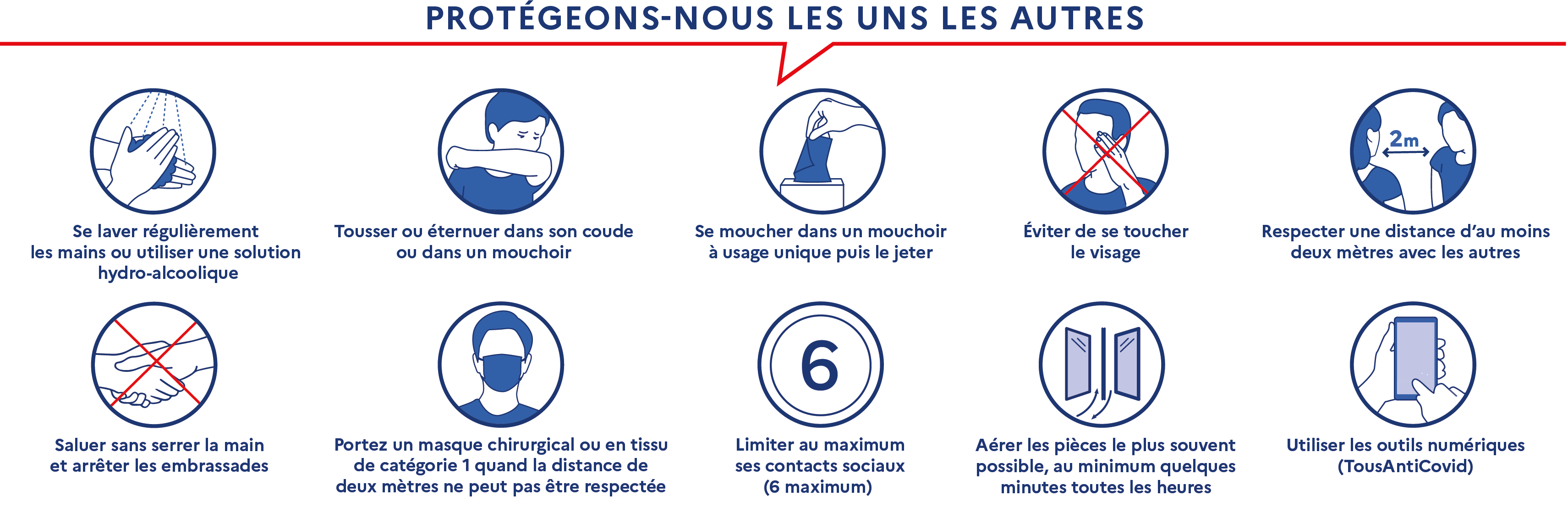
Given the high rate of virus transmission and the significant strain on the healthcare system, strict adherence to all individual and collective measures is more essential than ever. It remains crucial that anyone experiencing symptoms suggestive of COVID-19 immediately self-isolate and get tested as soon as possible. The use of digital tools (TousAntiCovid) is recommended to strengthen contact tracing and rapid isolation measures.
Learn more

bulletin national
4 March 2021
COVID-19: Epidemiological Update for March 4, 2021
Stay informed about the COVID-19 pandemic in France and around the world
Updates, Q&As, expert interviews... everything you need to know about the novel coronavirus (SARS-CoV-2) and COVID-19 in France and around the world
Our latest news

news
Growing Up with Screens. A special report in *La Santé en action* No. 474,...

news
Seniors, pregnant women, and nursing home staff: What is the status of their...

news