

September 26, 2017: World Contraception Day. How have French women’s contraceptive practices changed?
cp-contraception-250917.pdf
Download (PDF - 173.02 KB)
In observance of World Contraception Day on September 26 and 50 years after contraception was legalized in France under the Neuwirth Law, what methods do French women use? Have these methods changed, particularly in the wake of the “pill crisis” of 2012? Santé publique France has released the initial data from the 2016 Health Barometer,1 describing women’s contraceptive practices and how they have changed since 2010.
Condoms, the pill, and IUDs: the winning trio
Since 1967, when contraception was legalized, contraceptive methods have gradually diversified (implants, patches, vaginal rings, etc.). Today, women have more than a dozen options to choose from to find the contraception that suits their lifestyle, relationship status, and medical situation. But although the range of options has expanded, the same contraceptive pattern persists: condoms when first becoming sexually active, the pill when entering a relationship, and the intrauterine device (IUD) once the desired number of children has been reached. Thus, contraception in France remains primarily medicalized.
The decline in pill use continues, even though it remains widely used
Although the pill remains the most widely used method of contraception, particularly among those under 25, it has been experiencing a decline in popularity since 2012 following the debate over the risks associated with third- and fourth-generation pills. In 2010, 45% of women used the pill as a method of contraception; this figure dropped to 40.5% in 2013 and 36.5% in 2016. This decline has benefited other forms of contraception, particularly the IUD (+6.9 percentage points), condoms (+4.7 percentage points), and the implant (+1.9 percentage points). Trends in contraceptive use vary significantly by age group, except among women aged 15–19 and 45–49. The most significant changes since 2010 have been observed among women aged 20–29.
Among 20- to 29-year-olds, a dual trend toward replacing the pill
Among women aged 20–24, pill use declined gradually between 2010 and 2016, with the shift favoring various methods:
The IUD, whose use rose sharply between 2010 and 2013 (+3.6 percentage points),
The implant, which saw a sharp increase between 2013 and 2016 (+5.5 percentage points).
Condoms as a method of contraception, the percentage of use of which doubled in this age group, rising from 9% in 2010 to 19% in 2016.
Among women aged 25 to 29, the significant decline in pill use between 2010 and 2013 largely shifted toward IUDs (+9.8 percentage points) and condoms (+8.6 percentage points). Women aged 25 to 29 now use IUDs at the same rate as women aged 30 to 34 did in 2010.
"The main contraceptive changes observed among 20- to 29-year-olds follow two opposing trends. Either they are switching from the pill to more effective methods (IUD, implant), or, conversely, to condoms, which are certainly effective against sexually transmitted infections but less so in terms of contraception," notes Delphine Rahib, a researcher at the sexual health unit of Santé publique France.
"Choosing Your Contraception," the website that answers all your questions
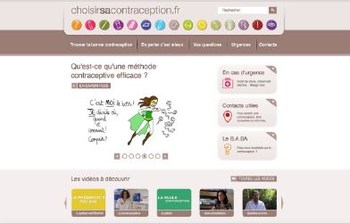
The leading website designed by Santé publique France, www.choisirsacontraception.fr, offers comprehensive and informed information on contraception. All contraceptive methods are presented there. Clicking on the icon allows users to learn about the method, its advantages, its disadvantages, and how to use it… Users can find more general information or learn how to discuss contraception with a partner, a loved one, or a healthcare professional.
"Despite the debates, the percentage of women of reproductive age who do not use contraception to prevent pregnancy remains stable. Today, we see greater diversity in contraceptive methods among 20- to 29-year-olds, though this diversity is still too heavily influenced by whether or not they have had children. Among women aged 20–24, the implant is three times more commonly used by women who have had children than by nulliparous women (24% vs. 7%). These data highlight the importance of continuing our efforts to raise awareness of contraceptive diversity and to help women find the most suitable—and therefore most effective—contraceptive method,” explains François Bourdillon, Director General of Santé publique France
Learn more:
Rahib D, Le Guen M, Lydie N. 2016 Health Barometer. Contraception. Four years after the pill crisis, changes continue. Saint-Maurice: Santé publique France, 2017. 8 p.
1 Survey conducted from January 8 to August 1 among a sample of 15,216 people aged 15 to 75. The analysis focuses on 4,315 women aged 15 to 49 who are concerned with contraception—women who are not postmenopausal, not infertile, not pregnant, who have had sexual intercourse with a man in the past 12 months, and who are not trying to have a child
Our latest news

news
Growing Up with Screens. A special report in *La Santé en action* No. 474,...

news
Seniors, pregnant women, and nursing home staff: What is the status of their...

news