


Health Issues
Getting a good night’s sleep reduces fatigue and stress, boosts memory and concentration, and improves mood. It also helps control appetite and weight. Sleeping less than 6 hours is associated with a higher risk of obesity, type 2 diabetes, high blood pressure, cardiovascular disease, and accidents. Sleep accounts for about one-third of our lives. It’s not time wasted—it’s health gained! Sleep is vital for the human body. Conversely, sleep disorders such as insomnia or sleep apnea affect many people and can have serious consequences for our health.
Key Sleep Statistics

How does sleep work, and what are its benefits?
Sleep consists of 4 to 6 consecutive cycles. Each cycle lasts about 1.5 hours. Each cycle includes different stages of sleep: light, moderate, deep, and REM (close to waking).
During sleep, the brain strengthens and creates new connections between neurons (brain cells) and eliminates toxins. It consolidates, reorganizes, and sorts the information learned. Sleep plays an essential role in memory, learning, and attention.
What is the ideal amount of sleep?
The duration of sleep and the distribution of its various stages throughout the night vary depending on age. The younger you are, the more sleep is recommended. As we age, sleep adapts to intra- and inter-individual factors.
What is a sleep disorder?
It is a condition that affects a person’s ability to fall asleep or their sleep (duration, quality, etc.). When sleep disturbances persist for more than three months and affect daily life or health, it is necessary to consult your primary care physician to receive appropriate treatment.
What are the main sleep disorders and their consequences?
Insomnia
When a lack of sleep becomes chronic, it is referred to as insomnia. Insomnia is characterized by difficulty falling asleep and/or frequent and prolonged awakenings during the night. It can affect well-being, leading to fatigue, irritability, mood disorders, and daytime sleepiness. Certain types of insomnia may indicate other health issues—such as pain, high blood pressure, hormonal imbalances, or depression—which is why it’s important to discuss them with your doctor.
Restless Legs Syndrome
This syndrome is characterized by unpleasant sensations in the lower limbs: tingling, pins and needles, itching, and the urge to move the legs, especially in the evening and at night. It has a significant impact on sleep quality and considerably reduces quality of life.
Sleep apnea syndrome
Sleep apnea syndrome (SAS) is defined by involuntary pauses in breathing (lasting at least 10 seconds at a time) occurring at least 10 times per hour of sleep and leading to numerous micro-awakenings. Those affected experience extreme fatigue and frequent episodes of drowsiness during the day. This syndrome significantly increases the risk of cardiovascular disease. The main identified risk factors are age, gender, being overweight, and obesity.
Hypersomnia
Hypersomnia is defined by an excessive need for sleep and episodes of excessive daytime sleepiness, despite normal or above-average sleep duration.
In all cases, you should consult your doctor regarding sleep disorders as well as the use of sleeping pills, whose side effects may increase with age.
Sleep Throughout Life
We experience the same sleep stages throughout our lives, but their organization changes.
In Babies
Right after birth, the “biological clock,” which regulates an infant’s sleep and wake cycles, is not yet set. At first, a newborn may sleep more during the day than at night, with irregular schedules. Over the weeks, the biological clock gradually adjusts, and the rhythm between sleep and wakefulness becomes more regular.
Between birth and age 2 (when the child has learned to walk and becomes more independent), sleep patterns undergo significant changes. These figures provide general guidelines, but sleep patterns ultimately depend on the baby’s temperament and the family’s living situation.
In total, including naps and nighttime sleep, infants generally sleep:
From birth to 3 months: between 14 and 17 hours over a 24-hour period, often in 2- to 4-hour stretches, with 2- to 3-hour periods of wakefulness.
From 4 to 11 months: between 12 and 16 hours, with longer stretches of sleep at night. The baby then gradually stops waking up and feeding at night and can sleep for 5 to 6 hours straight during the night.
From 1 to 2 years: between 11 and 14 hours, with regular bedtimes and wake-up times.
As babies grow, their sleep cycles get longer.
During the first few months, the cycle lasts an average of 50 minutes, alternating between restless sleep and quiet sleep. Around 6–9 months, the cycles extend to 70 minutes, alternating between REM sleep, slow-wave sleep, and deep slow-wave sleep.
During “restless sleep,” babies may move a lot, make facial expressions, whimper, or grunt, and it is generally not necessary to intervene or worry. During “quiet sleep,” the baby barely moves, except for the occasional startle.
From a very young age, mental activity occurs during sleep; it is particularly intense during restless sleep and then REM sleep, when dreams occur. Dreams are present throughout life.
Learn more:
Sleep Journals - Sleep and Schooling | Institut-sommeil-vigilance.org
A baby’s brain matures and develops. When the baby sleeps, you can see all kinds of emotions and facial expressions on their face—expressions that will eventually allow them to communicate with their parents and those around them. For example, we can see joy on their face (angelic smiles), but also anger, surprise, fear, disgust, and sadness. They learn new words while sleeping, which are transferred from short-term to long-term memory. Sleep helps the baby understand and retain the words they heard during the day.
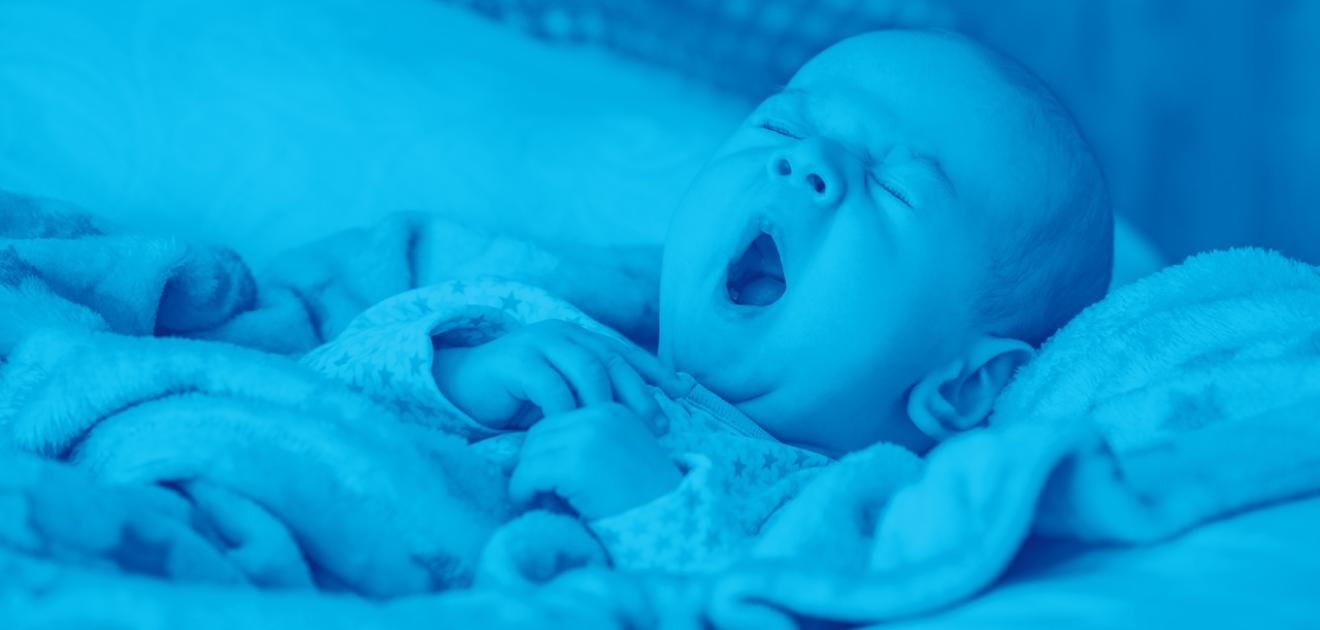
Establishing good sleep habits is essential; when the baby is very young, it’s pointless to impose a schedule. You gradually learn to recognize the baby’s sleep cues (yawning, rubbing eyes, whimpering, restlessness…) so you can put them to bed without waiting too long. It’s essential that a baby be allowed to sleep as much as they want. You should avoid waking them, except in special cases when a baby needs to be fed frequently.
Learn more:
Baby Sleep | 1000-premiers-jours.fr
Babies should sleep on their backs, whether for naps or at night. Sleeping on the side is not recommended because the baby may roll over and end up on their stomach.
Before 6 months of age
Until the baby is 6 months old, parents are advised to sleep near their baby’s crib so they can hear the baby at night. It is recommended that the baby sleep alone in a crib that meets safety standards, on a firm mattress that fits the crib. No objects should be placed in the crib: no crib bumpers, blankets or comforters, pillows, toys, or stuffed animals (soft objects that could cover the baby’s head or face are dangerous). A securely fitted fitted sheet and a properly sized sleep sack help prevent suffocation risks. It is dangerous to add a mattress to a travel cot. Adult beds, armchairs, sofas, and ottomans are not suitable for infants to sleep in, even for a short nap. Never give your baby medication to help them sleep. Do not fall asleep with your baby in your arms.
These recommendations help prevent the risk of sudden infant death syndrome (SIDS) and suffocation. A baby who shares a bed with their parents risks being crushed or suffocating.
When the baby sleeps near their parents, it helps reassure them, and it is easier to care for them at night, especially when breastfeeding.
Starting at 6 months
Starting at 6 months, it is recommended to place the baby’s crib in a different room from where the parents sleep.
Recommendations for promoting healthy sleep in babies
For a healthy sleep environment, do not smoke in the room where the baby sleeps; the room should be ventilated for at least 30 minutes a day, at a temperature between 18 and 20°C.
To help the baby fall asleep, it is important to distinguish between day and night:
- dimmer the lights in the evening,
- avoid exposure to blue light from screens (tablets, TVs, smartphones, etc.),
- avoid exposure to blue light from LED nightlights.
These cues will gradually help the baby identify the rhythms of the day. Routines can be established very early on to help them fall asleep. By repeating the same actions every night at bedtime, the baby understands that it is time to sleep and prepares for sleep. These routines reassure them.
From 6 months to 1 year, put your baby to bed while they are still awake so they can learn to fall asleep on their own. Do not give them the evening bottle in bed at bedtime. If your baby wakes up at night, wait a little while to give them time to fall back asleep on their own. These awakenings are normal. Going to bed should never be a punishment.
Difficulties, such as refusing to fall asleep or waking up several times during the night, are relatively common and are often due to the fact that the child has forgotten—or never learned—how to fall asleep on their own and associates their parents’ presence with falling asleep.
When nighttime awakenings become too exhausting and stressful for parents, and if the baby’s crying becomes hard to bear, do not yell at or shake your baby. Put them to bed on their back and leave the room. In the meantime, you can ask a family member or a professional for help. This time will also allow you to calm down. Don’t hesitate to discuss your baby’s sleep with the PMI or the doctor who cares for your child so you can be heard, advised, and supported.
In children
As children grow older, their sleep increasingly resembles that of adults. Their sleep patterns evolve in stages throughout childhood.
There are three stages of sleep in children: light slow-wave sleep, deep slow-wave sleep, and REM sleep.
Around age 5, a night consists of 6 to 7 sleep cycles, each lasting about 90 minutes (like in adults), composed of slow-wave sleep followed by REM sleep. “The child falls asleep in light slow-wave sleep and then deep slow-wave sleep. Muscle activity is very minimal, and eye movements are virtually absent. It is during deep slow-wave sleep that growth hormone is secreted, promoting the repair of worn-out tissues and cells each night.” During slow-wave sleep, among other things, prolactin is secreted, which stimulates the immune system. At the end of each cycle comes REM sleep, the dream phase. In children, sleep consists mostly of deep slow-wave sleep in the first few hours after falling asleep, with a gradual increase in REM sleep phases toward the end of the night. During the night, this is when confused awakenings, night terrors, or sleepwalking may occur, generally without serious consequences.
Functions of deep slow-wave sleep: physical recovery, long-term memory, and metabolic and thermodynamic balance.
Functions of REM sleep: brain development and consolidation of learning.
Between the ages of 3 and 6, the vast majority of a child’s sleep occurs at night, with daytime sleep taking the form of an early afternoon nap that typically disappears around ages 5–6, though there is significant individual variation. That said, even from a very young age, there are short sleepers and long sleepers. By the time children start first grade, sleep occurs exclusively at night.
Sleep needs for school-aged children during the week:
- 3–5 years old (preschool): 10 to 13 hours;
- 6–13 years old (elementary and middle school): 9 to 11 hours;
- 14–17 years old (middle school, high school): 9 to 10 hours.
Best practices to support the proper functioning of a child’s biological clock:
- maintain regular bedtimes and wake-up times, even on weekends and during vacations;
- Expose them to natural daylight to signal the biological clock about the day/night cycle. In the evening, keep the bedroom dark;
- establish time markers: regular mealtimes, playtime during the day, a bedtime routine, etc.;
- Make sleep a pleasure: make the bed properly; don’t overload it with toys.
Learn more:
- Sleep Journals - Sleep and School | Institut-sommeil-vigilance.org
Among adolescents and young adults
Sleep patterns in young people aged 15 to 25 are similar to those of adults but can be disrupted by hormonal or behavioral changes, including those related to screen use. These disruptions have a significant impact on sleep, with short- and medium-term consequences for adolescents’ health.
The recommended amount of sleep is 9 to 10 hours for high school students and 8 to 9 hours for college students and young workers.
Over the past 50 years, teenagers have “lost” 1 to 1.5 hours of sleep per night (INSV). This decrease can be attributed to a later bedtime among young people, due to the natural shift in biological rhythms associated with puberty and specific evening behaviors.
This societal phenomenon is primarily linked to:
- hyperconnectivity (smartphones, the Internet and social media, video games, tablets, etc.) in the evening and often at night, which exacerbates the disruption of biological rhythms and sleep deprivation, both in terms of duration and quality;
- stress caused by schoolwork (classes, school schedule, etc.);
- anxiety about the future;
- the choices they must make and the challenges of their professional future.
"On a daily basis, these factors that delay falling asleep (well past midnight for 1 in 4 young people) conflict with early morning schedules for the start of classes or work. Many young people’s sleep is therefore shortened on workdays, while on days off, it extends into the morning—and even beyond when bedtime has been much later than usual. However, the extra sleep on days off, if schedules are highly irregular, does not erase the ‘sleep debt’ that accumulates over the weeks. Most young people (9 out of 10) thus report feeling chronically sleep-deprived."
Learn more:
- Sleep in Young People | institut-sommeil-vigilance.org
Irregular bedtimes and very late wake-up times on days off disrupt the body’s circadian rhythm. As a result, sleep becomes insufficient in both quality and duration.
Short-term consequences: reduced attention span and concentration, attention deficits, drowsiness, irritability, and decreased physical and intellectual performance.
Long-term consequences: declining academic performance associated with a reduction in gray matter in the brain, excessive use of stimulants, alcohol, or even cannabis and other substances, anxiety, depression, and behavioral disorders (violence, hyperactivity, etc.), and obesity, often exacerbated by a diet high in fats and sugars.
Diet (including regular mealtimes), physical activity, the sleep environment, and alcohol and tobacco use all impact sleep in both young people and adults.
Learn more: Sleep in Young People | institut-sommeil-vigilance.org
In adults
Getting enough high-quality sleep helps protect against chronic diseases such as diabetes and high blood pressure.
At least 7 hours is the recommended amount of sleep for adults (ages 18–64) to maintain good health.
When you don't get enough sleep, you have a harder time concentrating. Your productivity suffers. We’re less motivated and have a harder time remembering things. Lack of sleep also affects our mood, making us feel more irritable, fragile, or down. Over time, anxiety or depression can set in. Sleeping less than 6 or 7 hours a night can also have negative effects on physical health, such as:
Weight gain with a risk of obesity and diabetes: when you don’t get enough sleep, you crave fatty and sugary foods more. Lack of sleep also reduces the effectiveness of insulin, a hormone that lowers blood sugar levels. When it doesn’t work as well, you may develop diabetes.
Risk of high blood pressure: Lack of sleep can lead to high blood pressure.
Weakened immune system: when we don’t get enough sleep, our bodies are less able to defend themselves against inflammation, infections, and pain.
In older adults
As people age, sleep quality may decline, and the body’s internal clock shifts, leading to earlier bedtimes and wake-up times.
The ideal amount of sleep for people aged 65 and older is between 7 and 8 hours.
As it evolves over the course of a lifetime, the biological clock runs ahead with age: people fall asleep earlier than before and wake up earlier in the morning. At the same time, sleep quality changes: it becomes lighter and is often interrupted by periods of wakefulness. Daytime alertness may be lower, leading to moments of drowsiness, especially in the early afternoon. Women have more difficulty falling asleep than men. They also sleep about 20 minutes less, but their sleep is deeper than men’s, while men maintain their daytime alertness better.
Sleep cycles shorten with age, and sleep—often punctuated by awakenings—contains less deep slow-wave sleep. Consequently, sleep becomes lighter, accompanied by reduced recovery and diminished memory capacity. Studies have shown that good sleep—and good daytime alertness—can be restored or maintained through daily exposure to daylight and regular physical activity appropriate for one’s age and abilities.
Learn more on the pourbienvieillir.fr website:
Taking Steps to Improve Your Sleep
By adopting good habits, you can take steps to improve your sleep, whether through daily personal routines or by creating conditions conducive to restful sleep.
What conditions promote good-quality sleep?
Preserving your sleep also means protecting the environment of your bedroom (or sleeping area).
Ideally, the bedroom should be:
quiet, or at least well-insulated from outside traffic noise and noise from neighbors. Wearing earplugs can be an alternative solution;
sufficiently dark, shielded from outside light, as light continues to pass through closed eyelids during the night and disrupts melatonin secretion.
What steps can you take to improve your sleep?
LEDs and other alert lights should be avoided, as should email alerts and phone notifications; 2 to 5 minutes of light exposure during the night is enough to speed up the heart rate, raise body temperature, and activate the brain. Leaving cell phones on at night triggers what is known as the “sentinel effect.” You stay on standby for fear of missing out on a message: a tweet, a comment on social media, a text message… The LEDs on screens, as well as string lights, spotlights, ambient lighting, flashlights, and certain toys… emit blue light, similar to sunlight. Blue light limits the production of melatonin, the sleep-regulating hormone. We feel the signs that signal sleep less.
Disconnecting from screens in the evening, at least an hour before bedtime, improves the quality and duration of sleep. You wake up more easily. You feel less sleepy during the day and are more focused.
The ideal temperature for the bedroom or sleeping area is 18°C.
In bed, add a blanket rather than turning up the heat, and wear socks if your feet are cold.
Avoid taking a bath or shower that is too hot within two hours of bedtime.
In winter, avoid activities that raise your body temperature in the evening, such as physical exercise.
In summer, taking a lukewarm or cool shower before bed can be refreshing. Alternatively, to cool off, you can place a cool washcloth on the back of your neck or use a spray bottle.
Opt for calm activities in the evening.
Go to bed as soon as you feel the first signs of sleepiness (yawning, heavy eyelids, etc.), but not before. If you can’t sleep, get out of bed.
If it isn’t too loud, a fan near the bed can help you fall asleep.
High-quality bedding helps with sleep.
Maintain regular wake-up and bedtime schedules, both on weekdays and weekends, and respect your sleep needs.
What improves sleep habits?
Taking a nap is very simple and free. Studies have shown that when done correctly (15 to 20 minutes), it improves reaction time and the quality of wakefulness after the nap. It provides biological benefits by counteracting the inflammatory response associated with sleep deprivation. In schools, as well as in the workplace for night shift workers or professional drivers who must drive long distances, napping has been shown to be effective and preventive.
Getting more sleep is highly effective for coping with stressful periods at work, during exams, or while traveling. The principle—and this applies only if you do not suffer from insomnia—is to extend your usual sleep hours (by going to bed earlier or taking naps) during the week leading up to the difficult period. Thanks to the proven elasticity and malleability of sleep, everyone can build up reserves to cope with periods of sleep restriction.
Several expert reviews and literature reviews have shown that moderate, regular exercise improves deep slow-wave sleep and reduces symptoms of insomnia. However, it is advisable not to exercise in the evening too close to bedtime, since physical activity promotes the production of a hormone that stimulates wakefulness, which may make it difficult to fall asleep. If this cannot be avoided, it is advisable to take a cool shower after exercising. This lowers body temperature and makes it easier to fall asleep.
Exposure to daylight is essential for a good night’s sleep. Located at the base of the brain, the body’s internal clock regulates our circadian rhythms. Every day, it resets itself thanks to the daylight that reaches the retina. It is this clock that produces melatonin, the hormone that regulates our sleep patterns. No matter the season, make the most of daylight: exercise outdoors, go for walks—especially in the morning—and open the shutters during the day (unless it’s too hot in the summer). At night, however, avoid light sources so as not to disrupt your internal clock.
There are clear links between diet and sleep. In fact, eating too frequently, eating too much rich food, or eating too close to bedtime provides the brain with a constant supply of fuel; this sends a wakefulness signal that impairs sleep quality. Conversely, sleep affects appetite: when we lack sleep, hunger hormones increase; we then feel even hungrier and crave fattier and sweeter foods. Additionally, the satiety signal indicating that we’ve eaten enough decreases.
Ideally, you should eat meals at regular times and not skip dinner, as maintaining a consistent meal schedule helps regulate your sleep patterns, and avoid drinking tea or coffee after 2 p.m. Both caffeine and theine make it harder to fall asleep. Because of them, sleep is less restorative, with frequent awakenings throughout the night. In the morning, you feel tired and crave coffee to wake up… It’s a never-ending cycle.
How do tobacco and alcohol affect sleep?
Nicotine is a stimulant; it delays the onset of sleep, increases nighttime awakenings, and makes sleep lighter. You should avoid having a drink in the evening to “wind down.” Alcohol can be misleading: at first, it helps relax the muscles and makes it easier to fall asleep, but it leads to fragmented sleep. Alcohol worsens snoring or sleep apnea, which are linked to a decrease in muscle tone. People who manage to reduce their alcohol consumption report sleeping better and having more energy.
What role does sleep play in work, mental health, and cognitive health?
Our sleep can be disrupted by our work. This may be due to stress, but that’s not the only factor. Our bodies are programmed to be awake during the day and asleep at night. When we work night shifts, we force our bodies into an unnatural rhythm. Working from home can also disrupt our nights by changing our habits and daily rhythms. Work, just like unemployment or being out of work, can have negative effects on our sleep. And lack of sleep, in turn, impacts our days at work, while unemployed, or out of work.
Night work: what are the consequences for our sleep?
Naturally, sleep is aligned with the day-night cycle. Night work or shift work, which disrupts this natural rhythm, can have significant long-term consequences. In 2016, ANSES (the French Agency for Food, Environmental and Occupational Health & Safety) listed the proven, probable, and possible health effects of night work: insomnia, sleep debt, risk of accidents related to drowsiness, obesity, cardiovascular disorders, and breast cancer. Protecting your sleep and your balance is important to prevent these complications.
It is our biological clock that dictates when we rest. Naturally, the period between 2 and 5 a.m. is when we fall asleep most easily: the temperature is at its lowest, our heart rate slows down, our brain activity decreases, and our reaction times slow. This can lead to a decrease in alertness. Drowsiness is a major risk factor for traffic accidents (accounting for 30% of accidents, ahead of alcohol and speeding), which is why you must be very careful behind the wheel.
What are some tips for better recovery?
- Eat a hearty dinner before heading to work.
- If you get hungry at night, have a light snack: a hot drink, soup, fruit, or dairy.
- Avoid coffee in the 5 to 6 hours before bedtime.
- Once you get home, eat breakfast and establish a bedtime routine. Take a shower that isn’t too hot to lower your body temperature and help you fall asleep.
- Read and have a hot drink to relax.
- Turn off your phone and screens.
- Darken your bedroom and block out noise.
- Aim to get at least 7 hours of sleep per day, with at least 5 consecutive hours if possible.
- Upon waking, eat a meal.
- On recovery days, prioritize rest, engage in regular physical activity, and maintain your family and social life[1].
Learn more:
- My Sleep Journal | santementale-info-service.fr
- Sleep and Work Notebook | institut-sommeil-vigilance.org
- Biological Clock, Sleep, and Medical Consequences of Shift Work | sciencedirect.com
Sleep plays a crucial role in mental health. Quality sleep is involved in stress management, cognitive function—particularly memory—and mood regulation.
Numerous studies have shown that sleep problems (sleeping too little or too much, poor sleep quality, insomnia) are associated with certain mental health disorders, including anxiety, depression, and more broadly, mood disorders. This link between sleep and mental health issues is complex and can be bidirectional: for example, sleep problems can contribute to anxiety and depression, and conversely, anxiety and depression can also disrupt sleep.
Taking care of your sleep is therefore taking care of your mental and physical health. If you have sleep problems, it is recommended that you consult a healthcare professional to prevent them from becoming chronic.
Learn more:
- Systematic review of the literature on the link between psychosocial factors and noncommunicable diseases (website of the Federal Office of Public Health FOPH)
- Healthy Eating, Physical Activity, and Sleep Hygiene (HEPAS) as the Winning Triad for Sustaining Physical and Mental Health in Patients at Risk for or with Neuropsychiatric Disorders: Considerations for Clinical Practice
- A Systematic Review Assessing Bidirectionality between Sleep Disturbances, Anxiety, and Depression
Researchers have shown in mice that during sleep, the circulation of the fluid surrounding the brain becomes more active to clear away waste and toxins that have accumulated while awake. In cases of disrupted sleep, this cleansing function may be less effective, leading to a buildup of toxic waste in the brain. This could play a role in certain neurodegenerative disorders such as Alzheimer’s disease.
A study of 8,000 British adults followed for over 25 years (the Whitehall II study) reveals a 20% to 40% higher risk of dementia among people who sleep six hours or less per night at ages 50 or 60.
See also
- Baby Sleep (1000-premiers-jours.fr)
- Sleep and Mental Health: Strong Links (santementale-info-service.fr)
In relation to

Nutrition and Physical Activity
thematic dossier
Nutrition and physical activity are two major determinants of health that contribute to improving the health of the population and are key priorities in public health policy.

thematic dossier
Cardiovascular disease and stroke
Les maladies cardio-neuro-vasculaires regroupent un ensemble de troubles affectant le cœur et les vaisseaux sanguins.