Early heat wave: a reminder of the precautions everyone should take
According to Météo-France, a heat wave will spread across several regions of the country starting Wednesday, June 15, 2022, and lasting through the end of the week, with temperatures expected to peak between Thursday and Saturday. Santé publique France urges caution and reminds the public of simple precautions to take during a heat wave.
Extreme heat, heat wave
thematic dossier
Heat waves can have a significant impact on health. It is therefore essential to take proper precautions. Certain measures must be put in place, especially for those most at risk.
A particularly early heat wave is spreading across the country, bringing high temperatures, especially to the southern half
According to weather forecasts issued by Météo France, the departments in the southern half of mainland France (the southwest, the lower Rhône Valley, and the Provençal hinterland) are expected to experience a heat wave starting this Wednesday, June 15, 2022. On Thursday, the heat will intensify across a large swath of the southwest extending to the lower Rhône Valley, and will gradually spread to regions further north, though it will remain less intense than in the south. The peak of the heat wave is expected between Thursday and Saturday. Highs could reach or exceed 35 to 39 degrees, or even 40 degrees locally, with lows not dropping below 20 degrees. A gradual cooling trend will begin in the west starting Sunday, June 19.
For real-time weather updates, check the Météo-France weather advisory map, which is updated regularly: http://vigilance.meteofrance.com
To view Météo-France news: click here
How can we minimize the health effects of a heat wave?
Heat waves or extreme heat can have significant health effects on all of us. However, special attention must be given to people who are vulnerable due to their age, health condition (medications that increase the effects of heat or interfere with the body’s ability to adapt to heat), or life circumstances (pregnant women), or due to overexposure to heat in school settings or as a result of working conditions, living conditions, behavior, or the environment.
Heat waves can lead to several thousand hospitalizations and hundreds of excess deaths. It is therefore important not to wait for warning signs to appear—such as no urine output for 5 hours or dark urine, breaking out in a sweat after drinking a glass of water, cramps, fatigue, or headaches—before taking preventive measures.
Simple tips and steps everyone can take to protect themselves from extreme heat
It is important to protect yourself, even when the heat is short-lived. Prevention tips apply to everyone, particularly vulnerable individuals (people over 65, people with disabilities or illnesses, dependent individuals, pregnant women, young children, homeless people, etc.) and workers exposed to heat, who are at higher risk of complications.
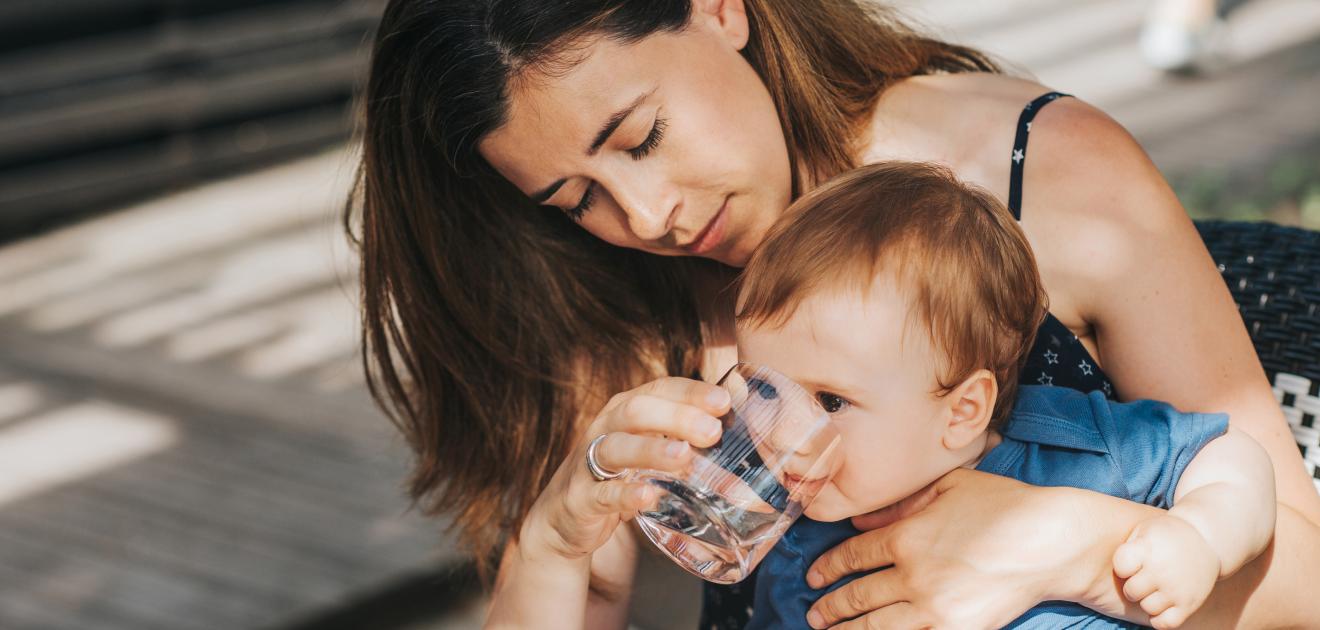
Drink water regularly, even if you aren’t thirsty; avoid alcohol
Stay cool: avoid going out during the hottest hours
Keep your home cool
Avoid physical exertion during the hottest hours of the day (work, sports)
During the day, shutters and windows should be:
kept closed on the sunny side. Their double barrier limits heat from entering the room
kept open on the shaded side if this allows for cross-ventilation. In this case, hang a damp towel so that evaporation cools the air. If it is not possible to create cross-ventilation using only the shaded windows, keep them closed.
As soon as outdoor temperatures are lower than indoor temperatures:
open the shutters and windows wide to cool the home
If the home cannot be kept cool:
go to a cool place (library, movie theater, stores, air-conditioned room, etc.)
If you are part of a high-risk group (elderly, disabled), consider registering with your local municipality to receive assistance during periods of extreme summer heat.
Workers exposed to heat are also at greater risk. In addition to the direct effects of heat, fatigue caused by both heat and work can lead to decreased alertness and workplace accidents. To limit work-related accidents caused by weather conditions, employers are required to implement a few simple measures mandated by regulations (providing workers with a rest area suitable for the weather conditions, arranging the worksite to allow for breaks under equivalent safety conditions, etc.). The INRS provides resources to help employers take action and raise employee awareness.
Learn more: www.inrs.fr/chaleur
Swimming: There Are Risks at Every Age
Whether at the beach, in a river, at a lake, or in a pool, warm weather is perfect for swimming and water activities. It’s important to teach children to swim as early as possible—or at least get them used to being in the water—and it’s never too late to learn to swim, even as an adult. Regardless of the swimming location, a child must always be under constant supervision and closely monitored by a single responsible adult; ideally, the adult should swim with the child.
Adults should take their health into account: do not swim if you feel unwell (fatigue, health issues, chills); do not overestimate your physical condition or swimming ability; do not consume alcohol before swimming; and enter the water gradually, especially after prolonged sun exposure.
It is also necessary to consider the swimming environment, especially in rivers, lakes, and the ocean; check weather conditions; and, in general, follow safety guidelines, observe swimming restrictions, and swim only in supervised areas marked by swimming flags.
Specific Measures to Take During the COVID-19 Pandemic
This heat wave is occurring while the COVID-19 pandemic continues. In this context, heat wave prevention is a priority, as the heat wave is occurring early in the season and the body has not had time to adapt to summer temperatures. Ventilation to combat the spread of COVID-19 should be limited to the coolest hours during the few days the heatwave lasts, when outdoor temperatures are lower than indoor temperatures. At the same time, to combat COVID-19 during heatwaves, it is important to:
strengthen other preventive measures: handwashing, wearing masks in air-conditioned public spaces, physical distancing
avoid using fans in the presence of others
self-isolate if you have symptoms or test positive
stay up to date with your COVID-19 vaccinations in preparation for future heat waves
Documents to download
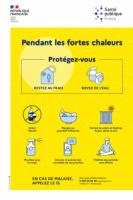
Here you will find prevention materials made available to healthcare professionals and the general public.
See also
First Heat Waves and UV Exposure: Simple Steps Everyone Can Take (News from 05/19/22)
Heat wave (report). Ministry of Health.
UV
thematic dossier
Ultraviolet radiation, which is everywhere, is emitted naturally by the sun or by artificial sources. It is responsible for various health conditions, including certain types of skin cancer.