Omicron variant: What do we know about the BA.2 sublineage?
The Omicron variant is circulating widely around the world, and new sublineages are emerging. Three Omicron sublineages have been identified: BA.1, BA.2, and BA.3. Learn all about their characteristics and their circulation in France.
Coronavirus: Circulation of SARS-CoV-2 Variants
Many variants of SARS-CoV-2 are circulating in France, and new variants carrying mutations are regularly identified. How are they monitored and classified? Learn all about the...
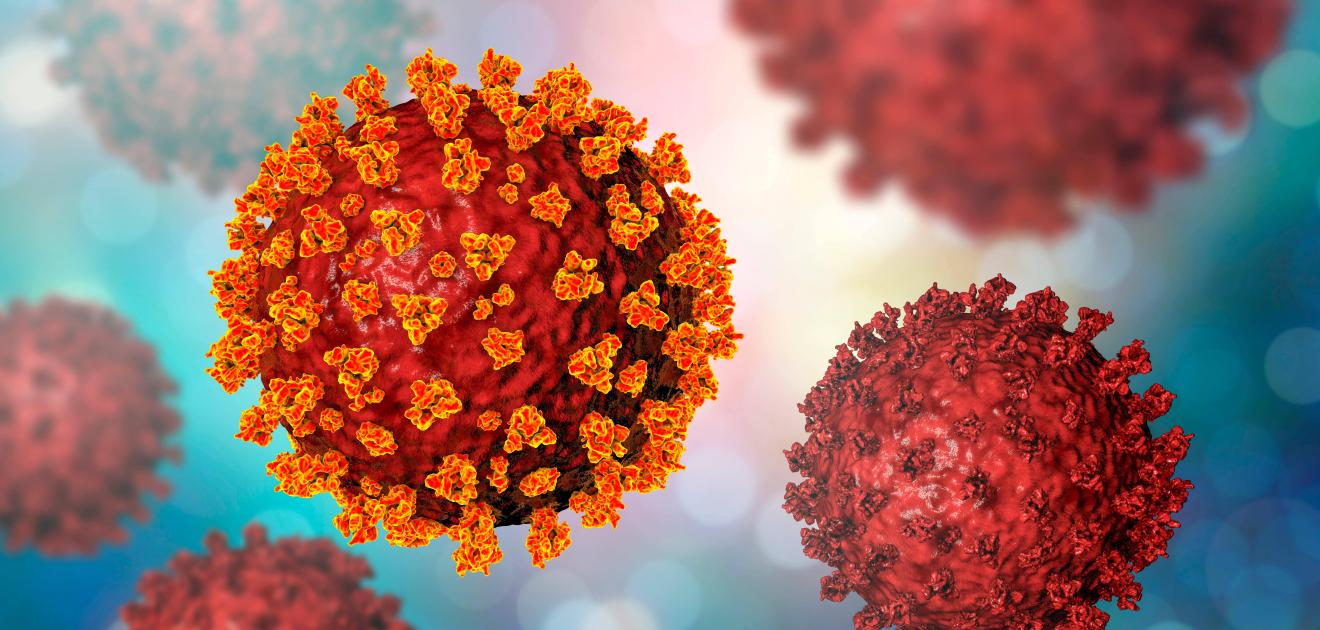
Currently, the Omicron variant is circulating at high levels worldwide. It is normal for a circulating variant to undergo genetic diversification over time and for new sublineages to emerge. This is the case with the Omicron variant, and to date, three Omicron sublineages have been identified: BA.1, BA.2, and BA.3.
All new Omicron sublineages that emerge are monitored in France by Santé publique France, which focuses specifically on those that may exhibit different characteristics in terms of transmissibility, immune escape, and severity.
Thus, the BA.2 sublineage was identified on December 1, 2021, and described on December 15, 2021, and January 5, 2022, in the variant risk assessments conducted jointly with the National Reference Center for Respiratory Infections. These risk assessments include, among other things, a list of mutations that differ between BA.1 and BA.2.
A new risk analysis will be published in the coming days.
What are the differences between BA.1 and BA.2?
One of the major differences is that BA.1 has the 69-70 deletion, whereas BA.2 does not (a deletion is a type of genomic alteration corresponding to the absence of a portion of the sequence—in this case, positions 69 and 70 in the S gene).
A number of countries, including South Africa and the United Kingdom, use this deletion via what is known as S-Gene Target Failure (SGTF) as a means of detecting Omicron. This method detects only BA.1 and does not account for BA.2.
How is BA.2 monitored in France?
In France, the screening strategy allows for the detection of all Omicron variants without distinction, whether BA.1 or BA.2, and thus provides real-time insights into the variant’s circulation level. Secondly, sequencing conducted as part of the Emergen Consortium allows for the differentiated tracking of the spread of these two sublineages. This highlights the complementary nature of these two surveillance systems: screening enables real-time monitoring of Omicron as a whole, while sequencing allows for a more detailed analysis of the different sublineages.
How is BA.2 circulating in France?
To date, according to sequencing results, BA.2 has been detected in France, but at very low levels. Isolated cases spread across different regions were detected through sequencing during the last two weeks of December 2021 and the first two weeks of this year.
This detection of BA.2 at low levels is shared by many European countries. However, in Denmark, a gradual replacement of BA.1 by BA.2 is being observed. Danish authorities are closely monitoring this phenomenon. Studies are therefore underway to compare the properties of BA.1 and BA.2 and assess whether the replacement of the former sublineage by the latter is due to different characteristics, particularly in terms of transmissibility, immune evasion, and severity.
These data, which will be produced by Denmark, are therefore being closely monitored. At this stage, preliminary analyses conducted by the Danish public health agency (Statens Serum Institut, SSI) have shown no difference between BA.1 and BA.2 in terms of their impact on hospitalizations.
Stay informed about the COVID-19 pandemic in France and around the world
Updates, Q&As, expert interviews... everything you need to know about the novel coronavirus (SARS-CoV-2) and COVID-19 in France and around the world