



Rise in imported dengue cases in mainland France: call for vigilance as the tiger mosquito season approaches
In light of the unprecedented number of imported dengue cases in mainland France since 2023 and the recent surge in reported cases since January 1, 2024, Santé publique France is urging everyone to remain vigilant in order to limit the risk of outbreaks within the country.

Dengue
thematic dossier
Dengue fever is a viral disease transmitted by mosquitoes of the genus Aedes. The most common symptoms are fever and joint pain. Its complications can be severe.
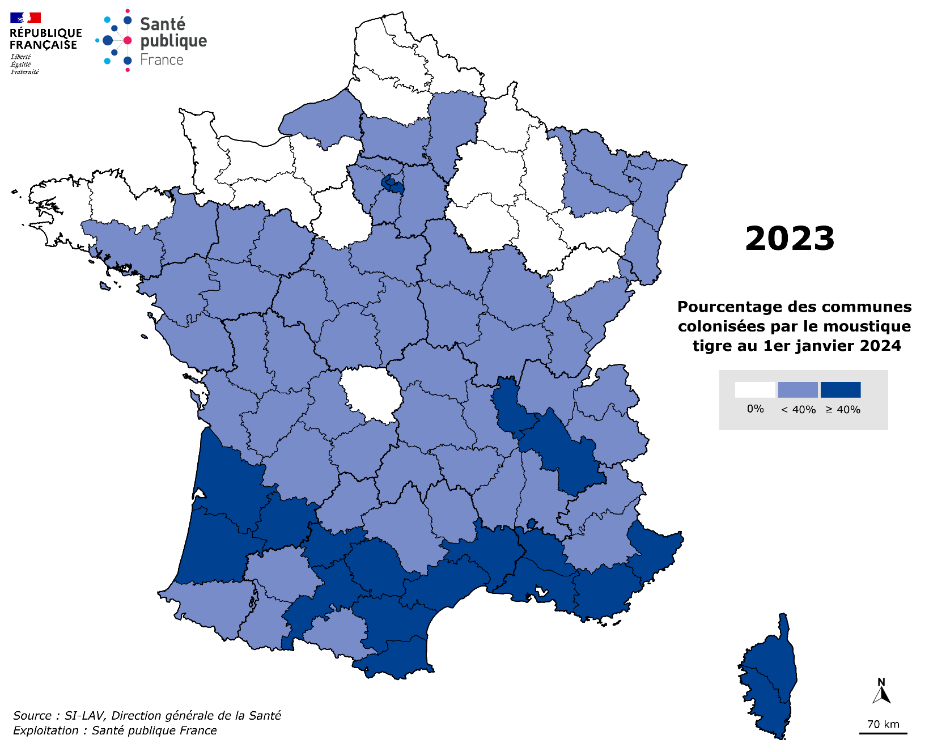
Dengue is an arbovirus disease transmitted by mosquitoes of the genus Aedes (commonly known as “tiger mosquitoes”), which are now established in 78 departments. The dengue virus circulates throughout the intertropical zone but can also be transmitted in mainland France and other temperate regions. Dengue surveillance relies on mandatory case reporting and, during the mosquito’s active season—from May 1 to November 30—is subject to enhanced surveillance coordinated by Santé publique France, in collaboration with the Regional Health Agencies and the National Reference Center for Arboviruses.
Since 2023, the number of imported dengue cases reported in mainland France has reached unprecedented levels, with more than 60% originating from the French Antilles, where an epidemic has been ongoing since mid-2023. Between January 1 and April 19, 2024, 1,679 cases of imported dengue were reported to Santé publique France, compared to 131 during the same period in 2023. During this period, 82% of cases originated from the French Antilles.
Due to the very active circulation of dengue in the French territories of the Antilles (Martinique and Guadeloupe) and the significant increase in the number of imported cases in mainland France since the beginning of 2024, Santé publique France is urging healthcare professionals to remain vigilant in diagnosing and reporting cases to health authorities, as well as travelers, as the active season for the mosquito that transmits the virus approaches, between May and November.
Figure 1. Percentage of municipalities infested by the tiger mosquito as of January 1, 2024
How is the dengue virus currently spreading in France?
The number of imported dengue cases in France reported through mandatory reporting has been rising since mid-2023, reaching unprecedented levels in the first months of 2024. Between January 1 and April 19, 2024—and while data for the most recent weeks had not yet stabilized—1,679 cases of imported dengue were reported, compared to 131 during the same period in 2023 (Figure 2).
The majority of cases (82%) were returning from the French West Indies, where an epidemic has been ongoing since mid-2023.
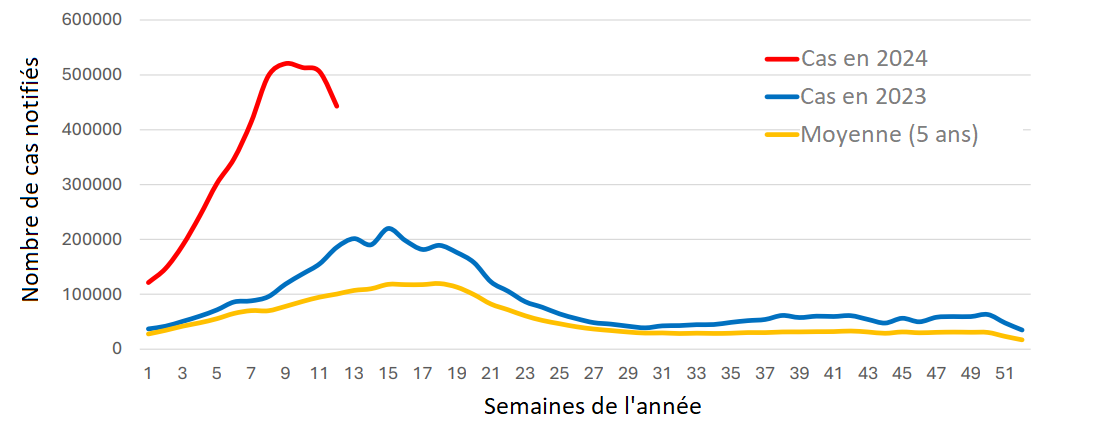
This situation comes as the Pan American Health Organization (PAHO) has warned of a sharp increase in dengue cases in the Americas compared to previous years. Between weeks 2024-01 and 2024-12, the cumulative incidence rate in the Americas region stood at 451 cases per 100,000 inhabitants, which is three times higher than during the same period in 2023 and five times higher than the average number of cases over this period during the past five years (Figure 3).
Figure 2. Monthly trend in imported dengue cases in mainland France (2006–2024 – 2024 data not yet finalized)
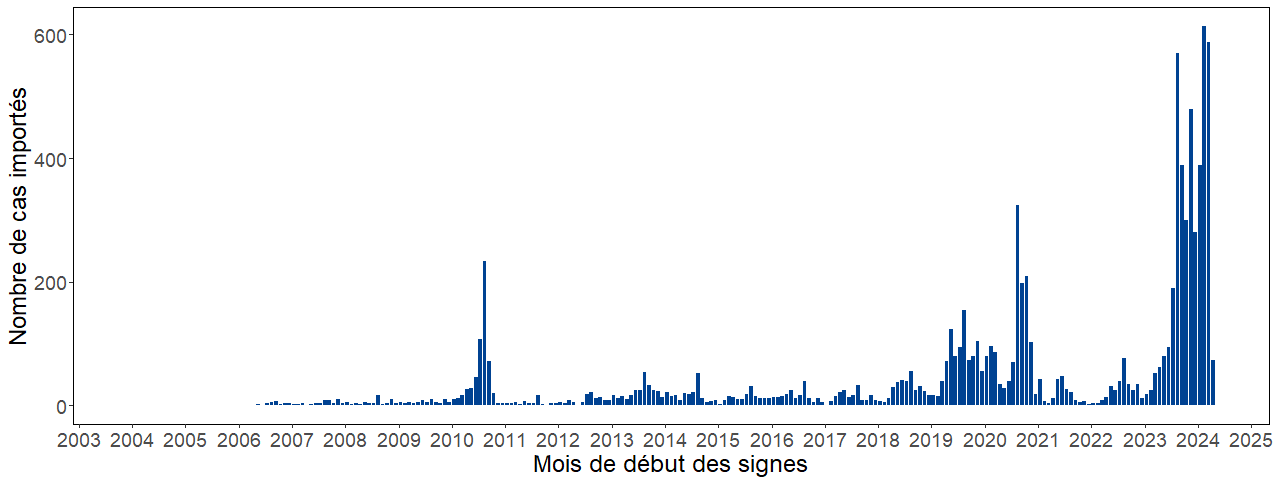
Figure 3. Total number of suspected dengue cases at the end of the 12th week of 2024, 2023, and the average for the past five years. WHO Region of the Americas.
How can you avoid getting bitten by the tiger mosquito?
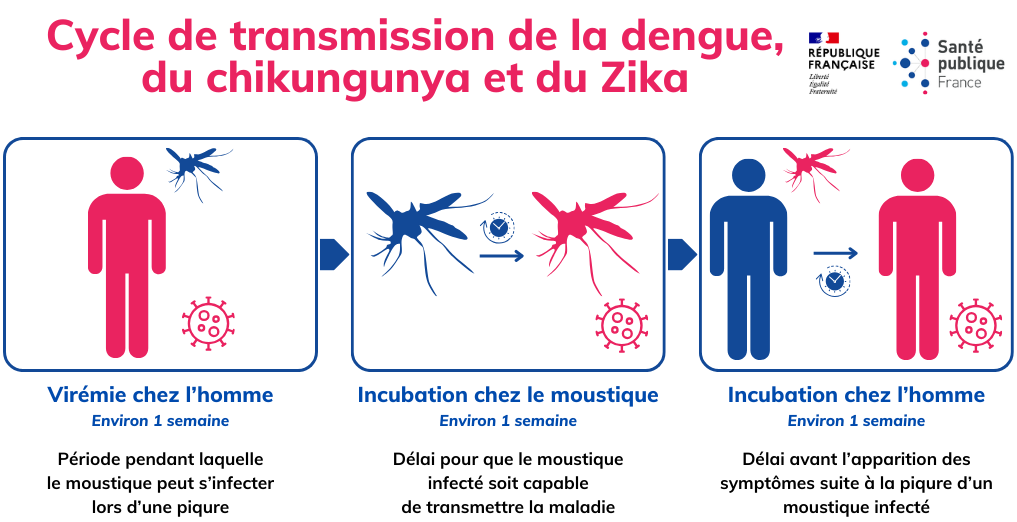
An infected person can infect a mosquito while the dengue virus is present in their blood (the so-called viremic phase, lasting about a week). The infection is then transmitted by the infected mosquito (which has previously fed on the blood of an infected person) and can, through another bite, transmit the virus to a new person. After a period of about one week (between 3 and 14 days), the infected person may develop the following symptoms: sudden onset of fever, often accompanied by chills, headache, retro-orbital pain, joint pain, nausea, and vomiting, and, in some cases, a rash.
The transmission cycle of dengue, chikungunya, and Zika
What precautions should you take?
The best steps to take to protect yourself and avoid mosquito bites in areas where dengue-infected mosquitoes may be present are:
wear loose-fitting, covering clothing;
use topical mosquito repellents;
use fans;
sleep under a mosquito net;
plug in electric mosquito repellent diffusers;
use mosquito coils outdoors.
What are the health recommendations for people traveling to or returning from regions where the virus is circulating?
For 15 days after returning from areas where dengue cases have been reported, it is recommended that you:
see a doctor if you have a fever and tell them which regions you are returning from;
continue to protect yourself against mosquito bites to prevent a tiger mosquito from biting you and, in turn, becoming infected with the dengue virus. It could then transmit the virus to others through a bite.
You are traveling to or returning from a region where the chikungunya, dengue, or Zika viruses are circulating

Vous partez dans une région où les virus chikungunya, dengue ou zika circulent

Vous revenez dans une région où les virus chikungunya, dengue ou zika circulent
You are travelling to a region where Chikungunya, Dengue or Zika viruses are in circulation.
You are returning from a region where Chikungunya, Dengue or Zika viruses are in circulation












