
Update on the SARS-CoV-2 Omicron variant (B.1.1.529)
On November 23, 2021, a new variant carrying numerous mutations was identified based on data shared on the international GISAID database. It was initially designated B.1.1.529 on November 24. The WHO has today named it Omicron. Knowledge about this variant is still incomplete at this stage, and work is underway to learn more about it.
See also
Classification of Omicron (B.1.1.529): SARS-CoV-2 variant of concern (World Health Organization)
Threat Assessment Summary: Implications of the emergence and spread of the SARS-CoV-2 B.1.1.529 variant of concern (Omicron) for the EU/EEA (European Centre for Disease Prevention and Control)
What do we know about the Omicron variant?
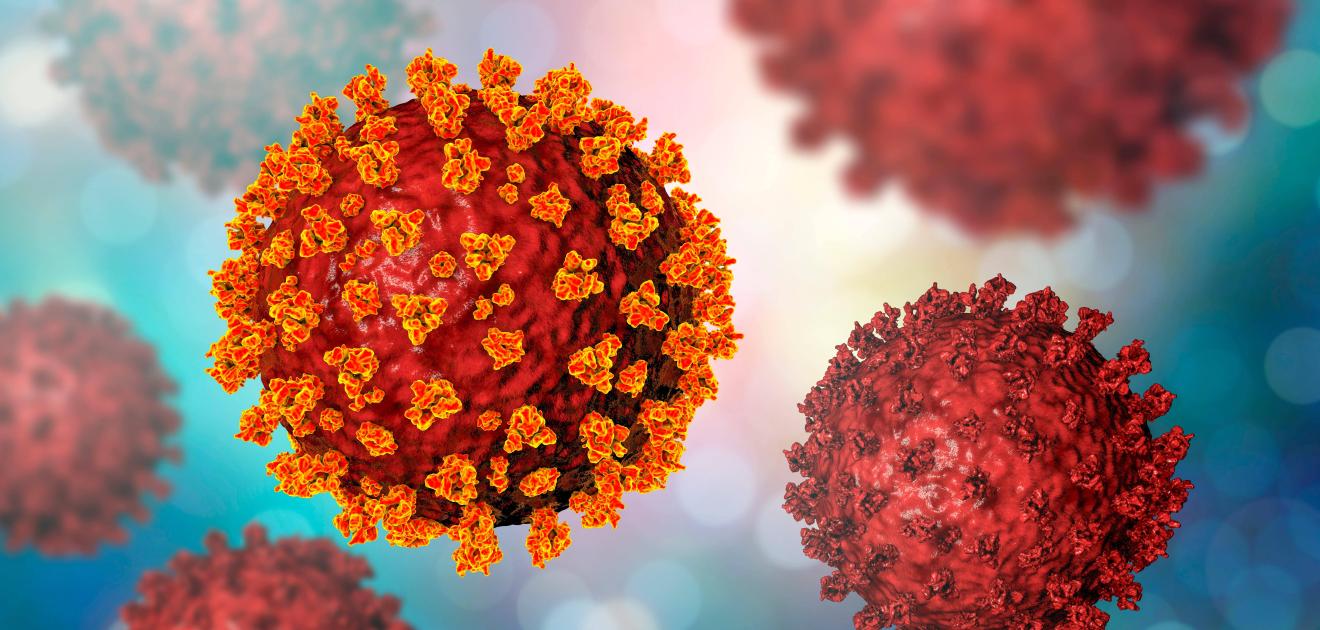
Currently classified by the ECDC as a variant of concern (VOC), the Omicron variant and its potential effects on the epidemic are being evaluated by Santé publique France, the CNR Virus des infections respiratoires, and partners of the EMERGEN consortium, in collaboration with the international scientific community. To date, we know that it has 32 mutations, insertions, or deletions in the spike protein, including the N501Y mutation, which has been linked to increased transmissibility in the Alpha, Beta, and Gamma variants. Other mutations could impact the effectiveness of the immune response. It also contains mutations that have not been widely detected until now. The potential effects of each of these mutations, as well as their combined effect, are currently being studied.
In its next risk analysis conducted as part of variant surveillance, Santé publique France will present a comprehensive update on the available knowledge regarding the Omicron variant; in the meantime, an interim update will be provided to share the latest findings.
These risk assessments are conducted regularly by Santé publique France and the National Reference Center (CNR) for Respiratory Infectious Diseases in collaboration. They focus on the various SARS-CoV-2 variants identified in France and internationally, based on available information regarding their spread and characteristics.
How can it be detected?
The Omicron variant may be suspected when the three mutations included in the current screening strategy are not detected. This serves as an indicator for identifying suspicious samples. These samples are then subjected to whole-genome sequencing, which is the only way to confirm the presence of this new variant.
All sequencing results generated at the national level are monitored in real time: this is what enables the detection of the potential emergence of this new variant in France.
In France, variant surveillance is based on a multi-tiered strategy:
systematic screening of positive tests to enable reactive surveillance;
complete viral genome sequencing, as part of the strategy deployed by the EMERGEN consortium, and in particular Flash investigations;
enhanced, multi-source epidemiological surveillance to identify any epidemiological signals (such as an increase in incidence) that could also serve as an alert.
This surveillance has already been strengthened in Réunion and Mayotte.
Where is it circulating?
In epidemiological terms, the Omicron variant has been detected in the following locations to date:
59 cases in Gauteng Province (Johannesburg) in South Africa
6 cases in Botswana
1 case detected in Hong Kong with a history of travel to South Africa
1 case imported into Israel by a traveler returning from Malawi
1 case detected in Belgium
InfoCovidFrance: The Daily Dashboard for Tracking the COVID-19 Pandemic
Santé publique France has made InfoCovidFrance, its new dashboard for tracking the COVID-19 pandemic, available to the public, providing easy and informative access to all the indicators it produces.
Coronavirus: Circulation of SARS-CoV-2 Variants
Many variants of SARS-CoV-2 are circulating in France, and new variants carrying mutations are regularly identified. How are they monitored and classified? Learn all about the...
Stay informed about the COVID-19 pandemic in France and around the world
Updates, Q&As, expert interviews... everything you need to know about the novel coronavirus (SARS-CoV-2) and COVID-19 in France and around the world