
External causes and conditions of illness and health
cp_chaire_remy_slama.pdf
Download (PDF - 217.11 KB)
Press and Media Contacts
David Adjemian
+33 1 44 27 10 18
presse@college-de-france.fr
Santé publique France
presse@santepubliquefrance.fr
Marie Delibéros: 01 41 79 69 61
Stéphanie Champion: 01 41 79 67 48
Cynthia Bessarion: 01 71 80 15 66
Charlène Charbuy: 01 41 79 68 64
Inaugural Lecture by Rémy Slama. Annual Lecture of the Collège de France Public Health Chair, in partnership with the national public health agency, Santé publique France, on Thursday, March 31, at 6:00 p.m., open to the public at the Collège de France, with a live stream. Free admission.
As an environmental epidemiologist, Rémy Slama studies the impact of environmental contaminants (air pollutants, endocrine disruptors, the exposome)—particularly in the context of early-life exposure—on human health.
Chronic diseases (cancers, cardiovascular and neurodegenerative diseases, etc.) are currently the leading cause of death in Europe, despite the burden of epidemics. Chronic diseases are often perceived as phenomena internal to the body and capable of being cured; the course will put into perspective a complementary approach, viewing disease as an external phenomenon that can be
prevented. Rémy Slama’s lectures at the Collège de France will emphasize this complementary view of disease as an external phenomenon that can be prevented. Rémy Slama will trace the emergence of environmental health research. He will review families of chemical compounds harmful to our health (lead, airborne particulate matter) and then factors for which knowledge is more recent, such as certain endocrine disruptors like bisphenol A.
As a research director at Inserm, he heads the Thematic Institute of Public Health and the environmental epidemiology team at the Institute for the Advancement of Biosciences (Inserm, CNRS, University of Grenoble-Alpes). He holds a Ph.D. in epidemiology from the University of Paris-Sud, is a graduate of École Polytechnique, and is an agricultural engineer. He chaired the scientific advisory board for the national research program on endocrine disruptors and is co-author of a report for the European Parliament on the effects and regulation of these substances. He is co-author of approximately 100 scientific publications and the book *Le Mal du dehors: The Influence of the Environment on Health* (Quae, 2022). He received the Tony McMichael Award from the International Society of
Environmental Epidemiology.
He has been invited to hold the Public Health Chair for the 2021–2022 academic year, a position created in partnership with the national public health agency, Santé publique France.
Rémy Slama will deliver his inaugural lecture, titled External Causes and Conditions of Disease and Health, on March 31, 2022. His series of eight lectures, Relationships Between Human Health and the Environment in the Anthropocene, will begin on April 6, 2022. His symposium, “Climate Change, Biodiversity, Human Health and Societies: Threats, Opportunities, and Research Needs,” will be held on June 16 and 17, 2022.
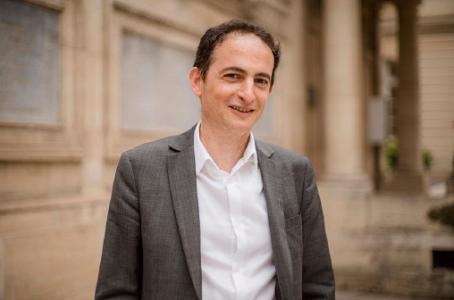
“Broadly speaking, the Anthropocene—which can be said to have begun with the Industrial Revolution in Europe at the end of the 18th century—marks a turning point. Before the 19th century, the majority of causes of death were linked to infectious agents and famines. With the Industrial Revolution, European societies underwent an epidemiological transition through which we achieved significant control over infectious diseases. Life expectancy has increased, and the leading causes of death have become chronic diseases, such as cardiovascular and neurodegenerative diseases or cancers. Environmental health research focuses on the more distant causes of these diseases—the causes of the causes of death, so to speak. These take the form of physical, chemical, behavioral, social, and—even today—infectious factors, although the latter no longer represent the primary contributor. All of this constitutes the exposome, a concept scientists have been exploring for the past fifteen years or so. It refers to the totality of environmental exposures we undergo from conception through the end of life.” Rémy Slama.
This quote is taken from his exclusive interview “The Fight Against Climate Change Is an Opportunity to Improve Health,” available on the Collège de France website along with his course schedule and biography.
“We are delighted to welcome Rémy Slama as a visiting researcher at the Collège de France’s Public Health Chair, following Arnaud Fontanet and Didier Fassin. The issues addressed in his lectures respond to many of the concerns our fellow citizens have today regarding environmental contaminants—concerns that require precise scientific answers in a rapidly expanding field that calls for both better public information to prevent and reduce risks, and the development of research capabilities commensurate with the challenges. “I am pleased that this chair, created in partnership with Santé publique France, can thus address these issues and help our audience—as well as the media and public decision-makers—better understand the specific factors underlying these sometimes less obvious causes of disease, such as our behaviors or our exposure to chemicals and pollutants present in the environment.” Prof. Thomas Römer, Administrator of the Collège de France.
“For the third time, Santé publique France is proud to support the Chair of Public Health at the Collège de France. The recent pandemic has shown just how essential it is to develop a culture of public health in France and to build a ‘force’ of expertise and intervention in public health, both in routine settings and during times of crisis. This requires a highly proactive approach to training, and the teaching offered at the Collège de France fully contributes to this. The topic taught this year by Remy Slama is at the heart of citizens’ concerns and our work. It perfectly illustrates the continuum between research and teaching in epidemiology for the development of prevention in the context of public health challenges. The culture of risk reduction thus relies on collective action at the most relevant level (citizen, institutional, political). Knowledge is the fundamental foundation for this, so that every citizen can take charge of their own health.” Prof. Geneviève Chêne, Director General of Santé publique France.
Events at the Collège de France are free and open to the public; no prior registration is required. Due to high attendance, members of the press and media are asked to reserve their seats by contacting presse@college-de-france.fr
About the Public Health Chair
Created in partnership with Santé publique France, the Public Health Chair is designed to promote excellence in research and intellectual debate at the highest level on public health issues, and particularly to raise awareness of contemporary challenges—in France and around the world—among the medical and scientific communities, policymakers, and the general public, by inviting a different distinguished figure to hold the chair each year.
About the national agency Santé publique France
Santé publique France addresses the need for a center of reference and expertise in public health in France. Based on the continuum between knowledge and action, our mission is to improve and protect the health of the population. It is responsible for continuously monitoring the health status of the population and its evolution to inform the development and evaluation of policies aimed at improving and protecting health. Our work addresses major public health challenges over the long term, ranging from protection against threats (including infectious and environmental risks) to improving health (health determinants, prevention, health promotion, and reducing the burden of chronic diseases, as well as social and regional inequalities). Santé Publique France is a public institution under the supervision of the Ministry of Solidarity and Health.
About the Collège de France
Since 1530, the Collège de France has fulfilled a dual mission: to be both a center for the most daring research and a venue for its teaching. It thus offers instruction to all interested members of the public, without any enrollment requirements, in “knowledge as it is being developed in all fields of the humanities, sciences, and arts.” The Collège de France is an associate member of PSL University
Our latest news

news
Growing Up with Screens. A special report in *La Santé en action* No. 474,...

news
Seniors, pregnant women, and nursing home staff: What is the status of their...

news