


Results of the 2021 NOYADES Survey: Prevention Remains a Top Priority
cp_noyades_210622.pdf
Download (PDF - 324.46 KB)
Press Contacts
Santé publique France
presse@santepubliquefrance.fr
Stéphanie Champion: 01 41 79 67 48
Marie Delibéros: 01 41 79 69 61
Charlène Charbuy: 01 41 79 68 64
Directorate General for Health
Presse-dgs@sante.gouv.fr
01 40 56 84 00
Ministry of the Interior
dgscgc-com@interieur.gouv.fr
Ministry of Sports and the Olympic and Paralympic Games
ministere@jeunesse-sports.gouv.fr
01 40 45 90 15
Ministry of Ecological Transition
presse@ecologie.gouv.fr
Santé publique France is releasing today the results of the ninth edition of the NOYADES survey, conducted throughout France (mainland and overseas territories) from June 1 to September 30, 2021, with support from the Ministry of Health and Prevention, the Ministry of the Interior, the Ministry of Sports and the Olympic and Paralympic Games, and the Ministry of Ecological Transition and Territorial Cohesion. The results reported 1,480 accidental drownings, 27% of which resulted in death. While swimming involves risks, most drownings are preventable. Therefore, implementing prevention measures tailored to age and the circumstances of the incident remains a public health priority.
The number of drowning deaths remains high in 2021
The NOYADES survey, conducted every three years, aims to record all accidental drownings and describe the circumstances surrounding them and the characteristics of the victims. It is based on information collected through questionnaires from emergency services (including firefighters and the Samu-Smur). A drowning is counted if there is an organized rescue response, followed by hospital care (visit to the emergency room, hospitalization) or death.
During the summer of 2021, 1,480 accidental drownings were recorded, a 10% decrease compared to the summer of 2018, which saw 1,649 cases and held the record for all NOYADES surveys. The proportion of fatalities, however, was comparable in 2021 (27%) and 2018 (25%). This decrease in the total number of accidental drownings can be attributed in particular to weather conditions that were not conducive to swimming (temperatures, sunshine) across much of mainland France during the summer of 2021.
These accidental drownings occurred in all locations and affected people of all ages. In 2021, they were more common among young children and the elderly, with 22% of accidental drownings involving children under 6 and 26% involving people aged 65 and older. The proportion of drownings resulting in death was higher among those aged 65 and older: 41% compared to 6% among children under 6.
Regarding the locations where drownings occurred, 47% of accidental drownings took place at sea, 26% in swimming pools of all types, 23% in rivers or bodies of water, and 4% in other locations (e.g., bathtubs or ponds). The proportion of fatalities was higher among drownings occurring in bodies of water (49%) and in rivers or streams (41%), whereas it was 25% at sea, 15% in all types of swimming pools, and 14% in other locations. Drownings in swimming pools primarily involved children under 6 years of age, while drownings at sea primarily involved those aged 65 and older.
It is important to note, however, that many of these drownings occurred as restrictions implemented to manage the COVID-19 pandemic were being lifted. In this context, these drownings could be, in part, linked to swimmers’ misjudgment of their physical abilities or to a decline in health following a long period of lockdown and reduced physical activity. It is therefore crucial to remind people of all ages—from the youngest to the oldest—about drowning prevention measures, emphasizing the importance of taking into account each individual’s physical fitness and health status.
For a gradual and safe return to swimming, especially after a period of reduced or no physical activity:
Take your physical condition into account
Do not swim if you are experiencing any physical discomfort (such as fatigue, health issues, chills, or muscle soreness)
Adjust the intensity of your swim to your abilities and do not overestimate your swimming level. When resuming swimming after a break, focus on short distances. Before going for a swim, make sure your physical fitness allows you to do so. Remember that it is more difficult and tiring to swim in natural bodies of water (sea, lake, river) than in a pool
Don’t hesitate to consult a doctor for guidance on resuming swimming
Swimming involves risks at any age, but simple precautions can be taken to ensure safety:
For young children:
mediumTeach children to swim as early as possible and help them feel comfortable in the water from a young age
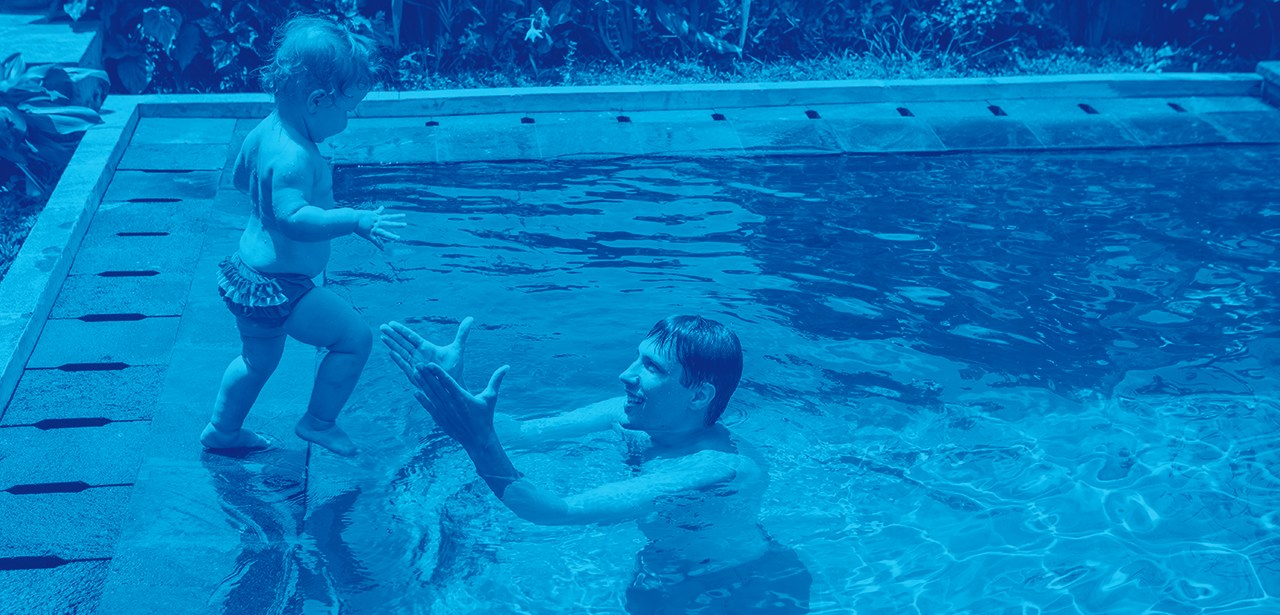
Supervise children at all times; always stay close to them when they are playing near the water, and swim with them when they are in the water
Each child must be closely and constantly supervised by a single adult who takes responsibility for them while they are swimming
Exercise particular caution when swimming in above-ground (non-inground) pools that lack safety features
For adults:
mediumIt’s never too late to start or relearn how to swim
Be mindful of the swimming environment, especially in rivers, lakes, and the ocean. Check the weather conditions and, in general, follow safety guidelines and swimming restrictions, and swim only in supervised areas marked by swimming flags[1], where rescue teams can respond more quickly.
Let a loved one know before you go swimming
Enter the water gradually, especially after prolonged sun exposure
Do not consume alcohol before swimming
Santé publique France and the Ministries of Health and Prevention, the Interior, Sports and the Olympic and Paralympic Games, and the Ministry of Ecological Transition and Territorial Cohesion are providing healthcare professionals and the general public with prevention tools outlining the steps to take to develop water confidence, swim, and engage in water activities safely. These prevention tools are available here. A prevention campaign will be rolled out throughout the summer, particularly on social media, to inform and raise public awareness about the risks of accidental drowning.
Download

rapport/synthèse
4 August 2023
Epidemiological surveillance of drowning. Results of the 2021 NOYADES survey
Drowning Report (Santé publique France)
Swimming Report (Ministry of Health)
Drowning Prevention Report (Ministry of Sports)
Learn more about the new signage for public swimming areas
[1] The regulations governing signage used on public beaches and swimming areas were updated as of March 1, 2022 (Decree No. 2022-105 of January 31, 2022, concerning signage used at swimming areas that are open to the public free of charge, developed, and authorized)
Drowning
thematic dossier
Our latest news

news
Winter Illnesses: A Dynamic and Accessible Way to Track the Spread of...

news
SIBCA 2026: The UrBaCS network presents its solutions for cities and...

news












