Antibiotic resistance: a major public health challenge
Antibiotic resistance is identified by the World Health Organization as one of the most serious threats to public health, requiring a “One Health” approach that recognizes the interconnectedness of human health, animal health, and ecosystem health. Over time, the use of antibiotics leads to increased bacterial resistance, ultimately threatening the effectiveness of these treatments. This resistance spreads among living organisms and into the environment.
Two pillars for effectively combating antibiotic resistance in human health
Prevent infections and limit the transmission of bacteria and resistance genes
Use antibiotics wisely (the right ones, when needed)
Since 2016 in France, an interministerial roadmap for controlling antibiotic resistance has coordinated actions in human health, animal health, and the environment under a “One Health” approach. Each year, a summary of updated data is published by Santé publique France and its partners on the occasion of European Antibiotic Awareness Day on November 18.
This year, the publication of this summary comes amid the COVID-19 pandemic, highlighting that our behaviors can have a rapid impact on certain indicators of antibiotic resistance. Hand hygiene, protective measures, and ventilation of enclosed spaces can, by helping to limit the spread of infections, contribute to controlling antibiotic resistance.
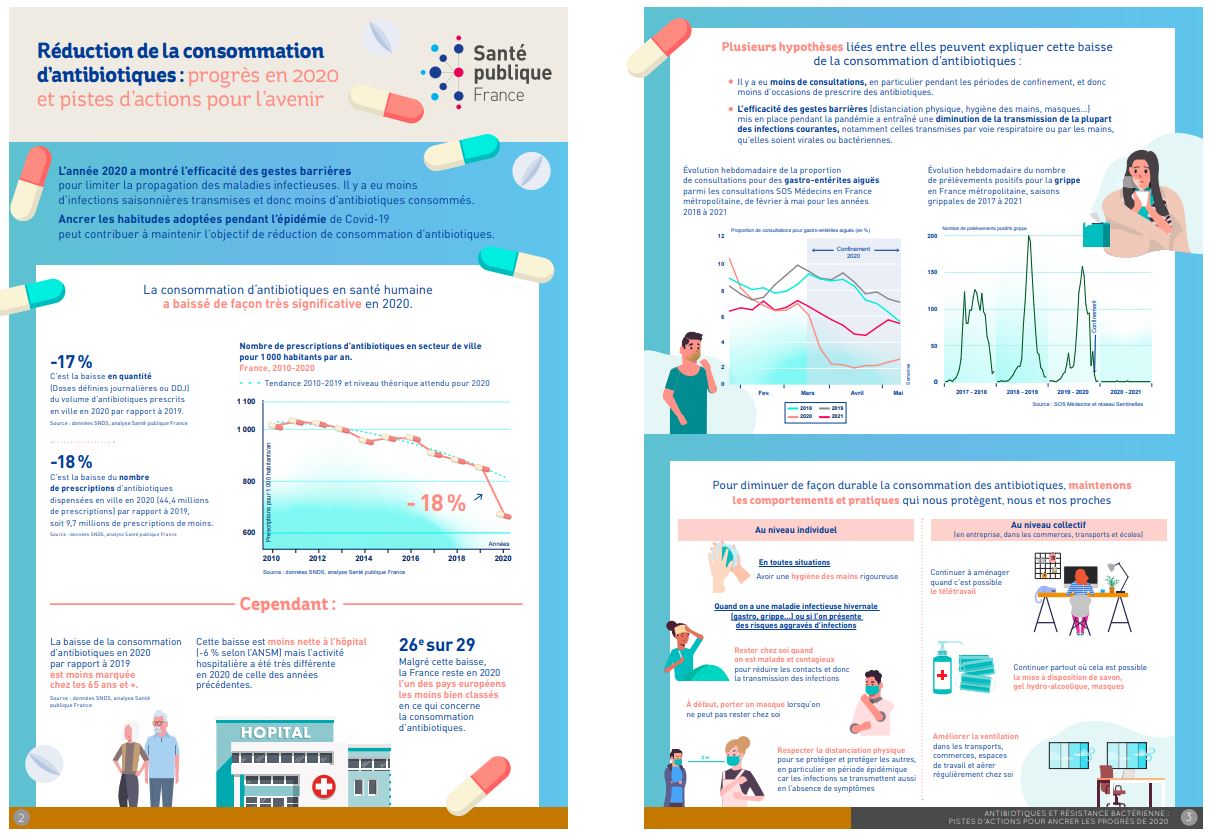
In this context, an educational infographic focused on human health has been produced. It highlights the significant decrease in antibiotic use observed in 2020, a departure from previous years. In contrast, it also shows the drastic reduction in healthcare utilization and common winter illnesses and reminds us of the behaviors and practices adopted during the COVID-19 pandemic that protect us and our loved ones.